
Some big news, just in time for December –
The missing leg and foot for the ball turret are now reinstalled!
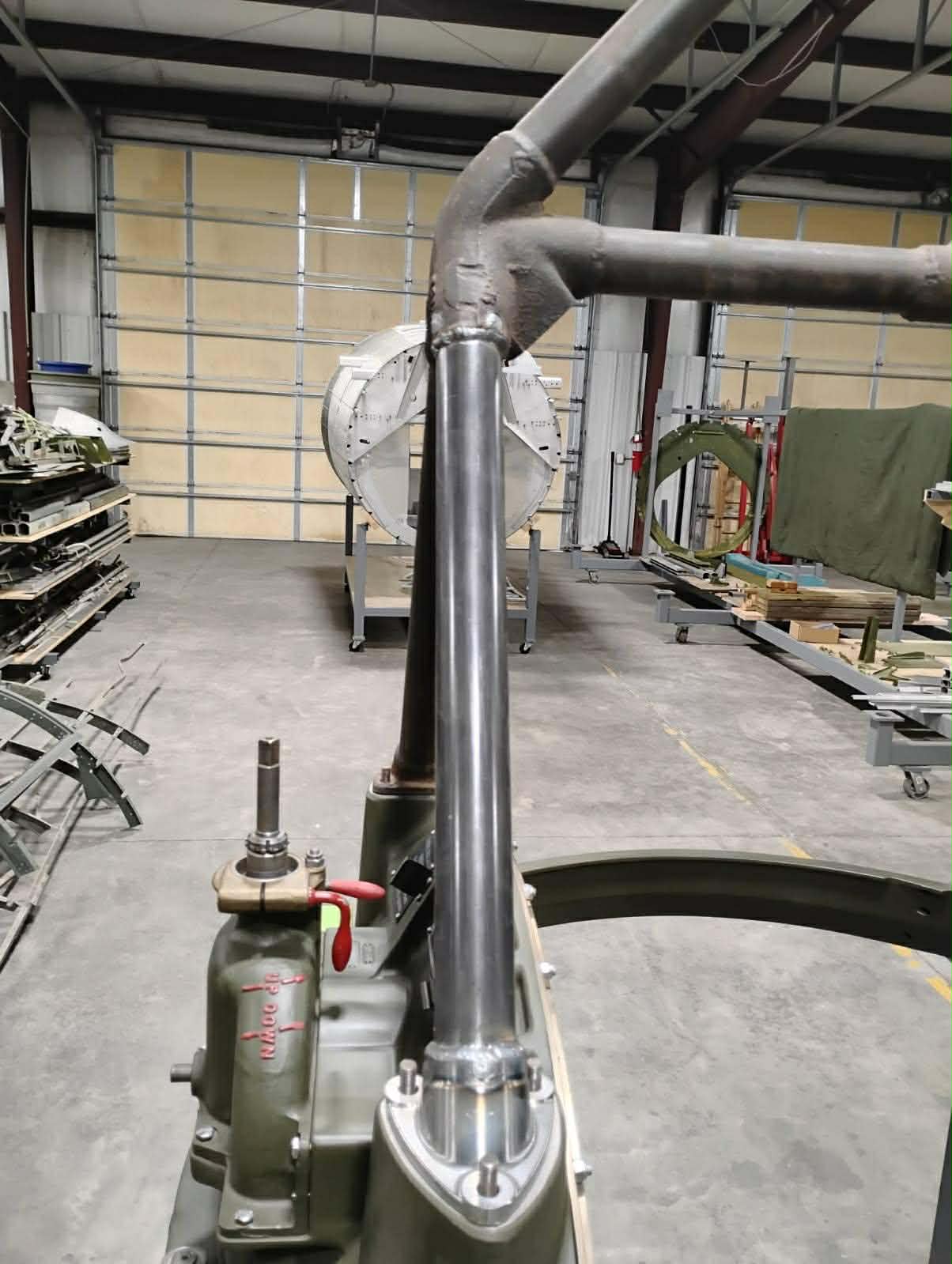
Here is the story:
The ball turret trunnion and hanger assembly for Lucky Thirteen was acquired in August of 2024. One of costliest acquisitions for the project thus far, it was an effort years in the making and a major step forward in the rebuilding of the aircraft’s ball turret.
While the trunnion was in great shape, the hanger assembly was not so fortunate. The hanger assembly was one of the defining features of the Type A-2 Ball Turret so common to B-17Fs and late-B-17Es, as it was so much larger than the other variants.
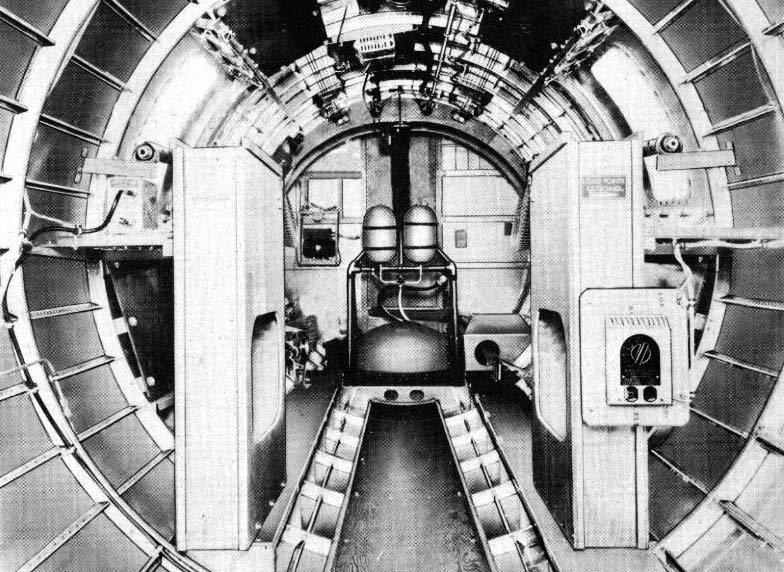
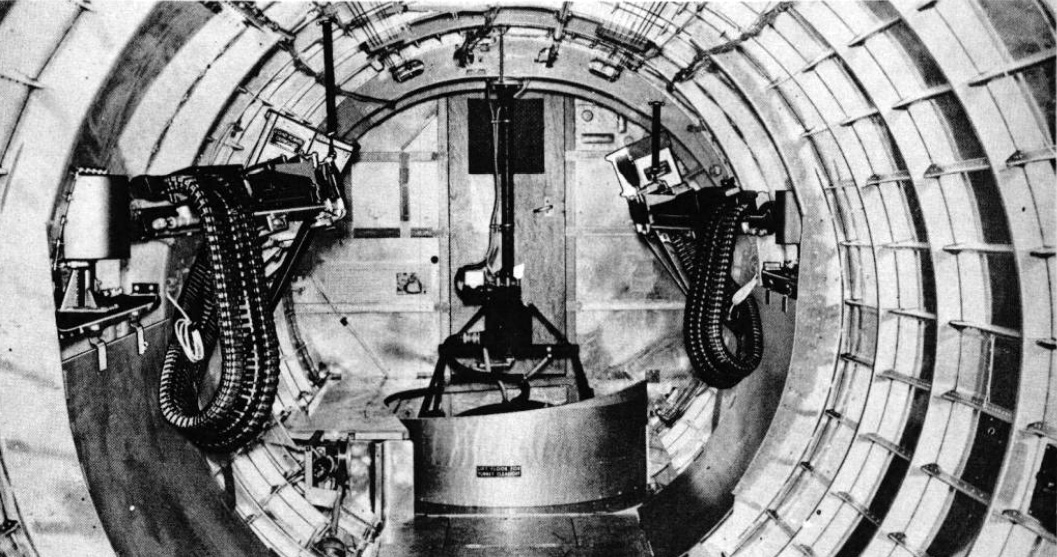
A comparison of waist sections of a B-17F identical to Lucky Thirteen (top) and a typical B-17G (bottom). The B-17F is equipped with a Type A-2 Ball Turret while the B-17G is equipped with a Type A-2A. Note how much smaller the frame is on the A-2A.
On the example we acquired, not only was the spare parts box and oxygen tank brackets missing (to be expected), but one of the legs was also broken off.
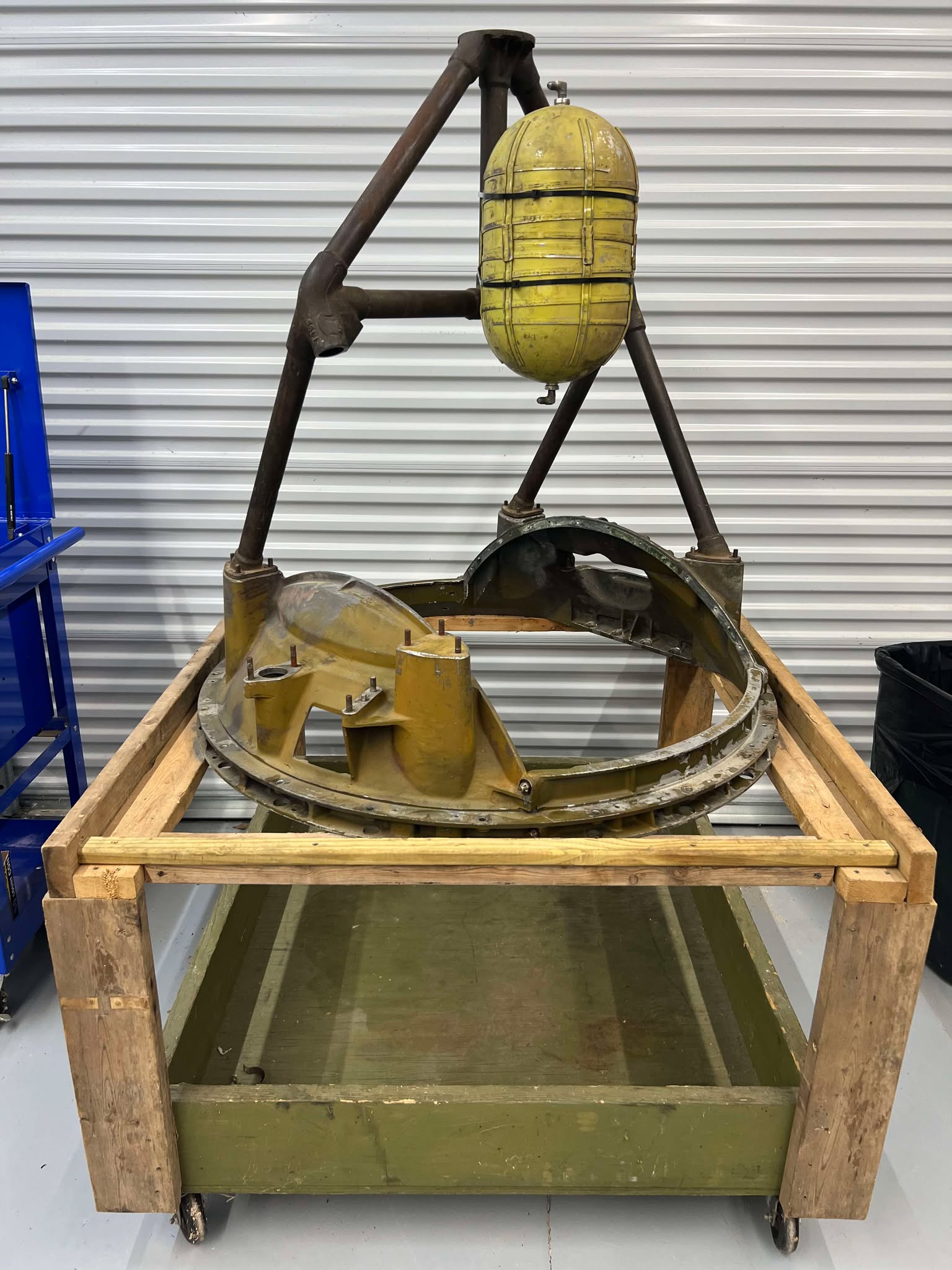
The A-2 trunnion and hanger, with an F-1 Oxygen Tank zip-tied to the frame for fun. Note the missing leg.
Photo taken 28 December 2024.
The leg itself was nothing remarkable, being made of ordinary steel tubing. The issue was the foot. The originals were cast and casting steel, particularly in small quantities, is not easily accomplished. We began by putting out a call for an original, in the hopes that someone might have a piece of wreckage. We were not so fortunate. So, knowing that the turret’s blueprints are lost to history, we set about modelling the missing foot.
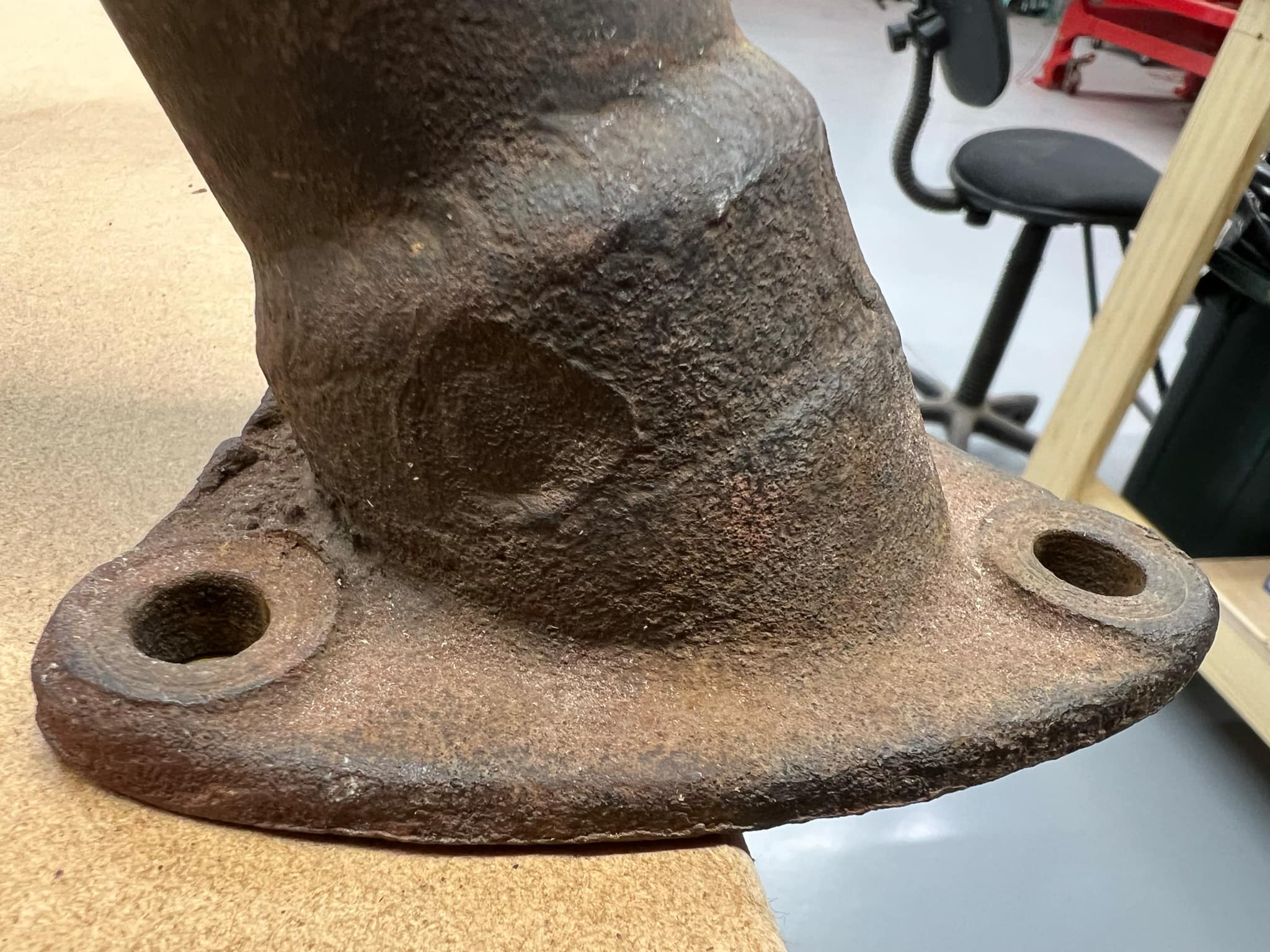
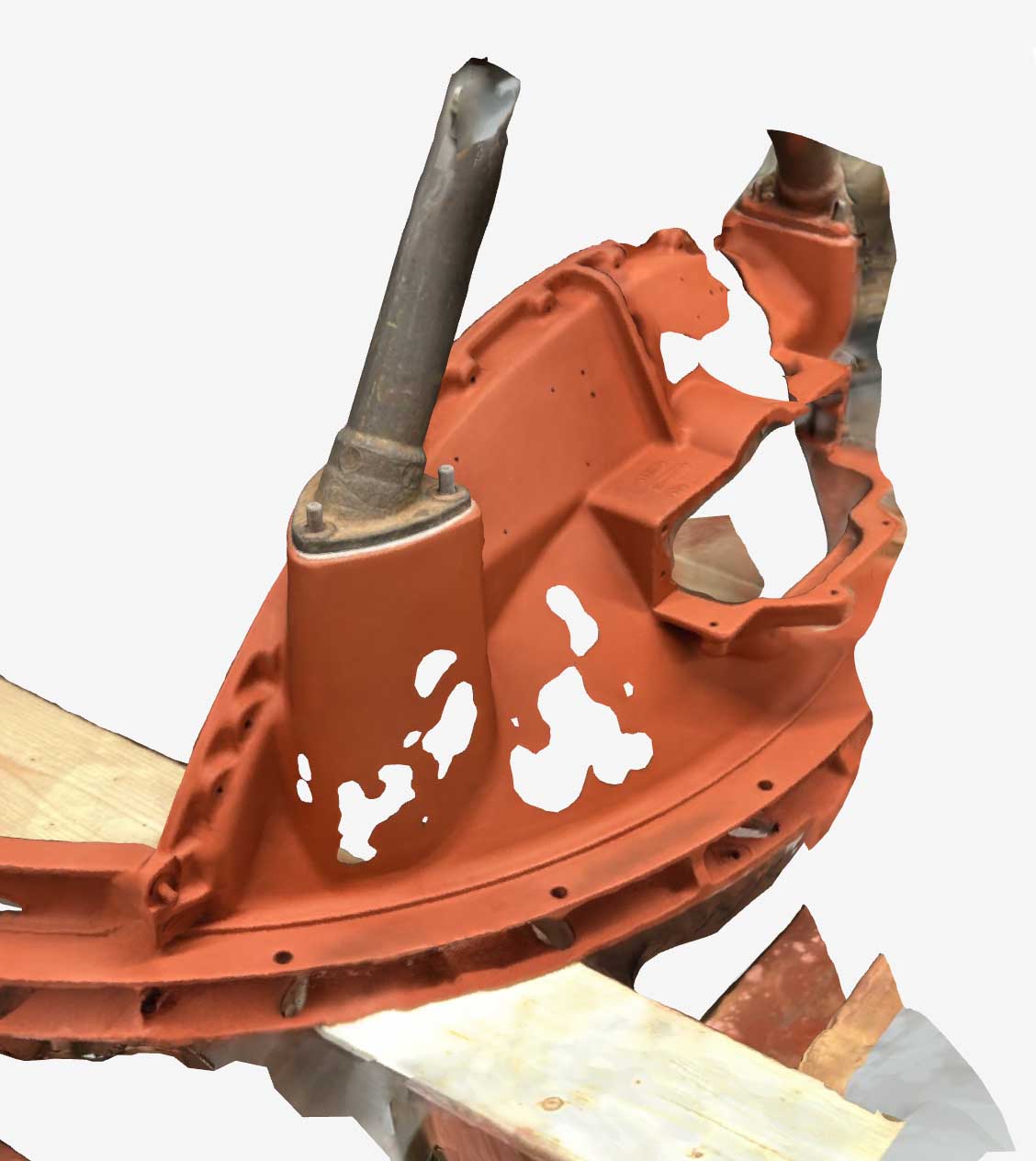
We started in April by taking detailed measurements of the remaining three feet as well as doing a rough 3D scan.
It really is remarkable how fast technology has progressed, now being at a point where people can do a simplified 3D scans using a cell phone.
Using this information, Howard Lawson was able to design a CAD model, which we had 3D printed to test the fit.
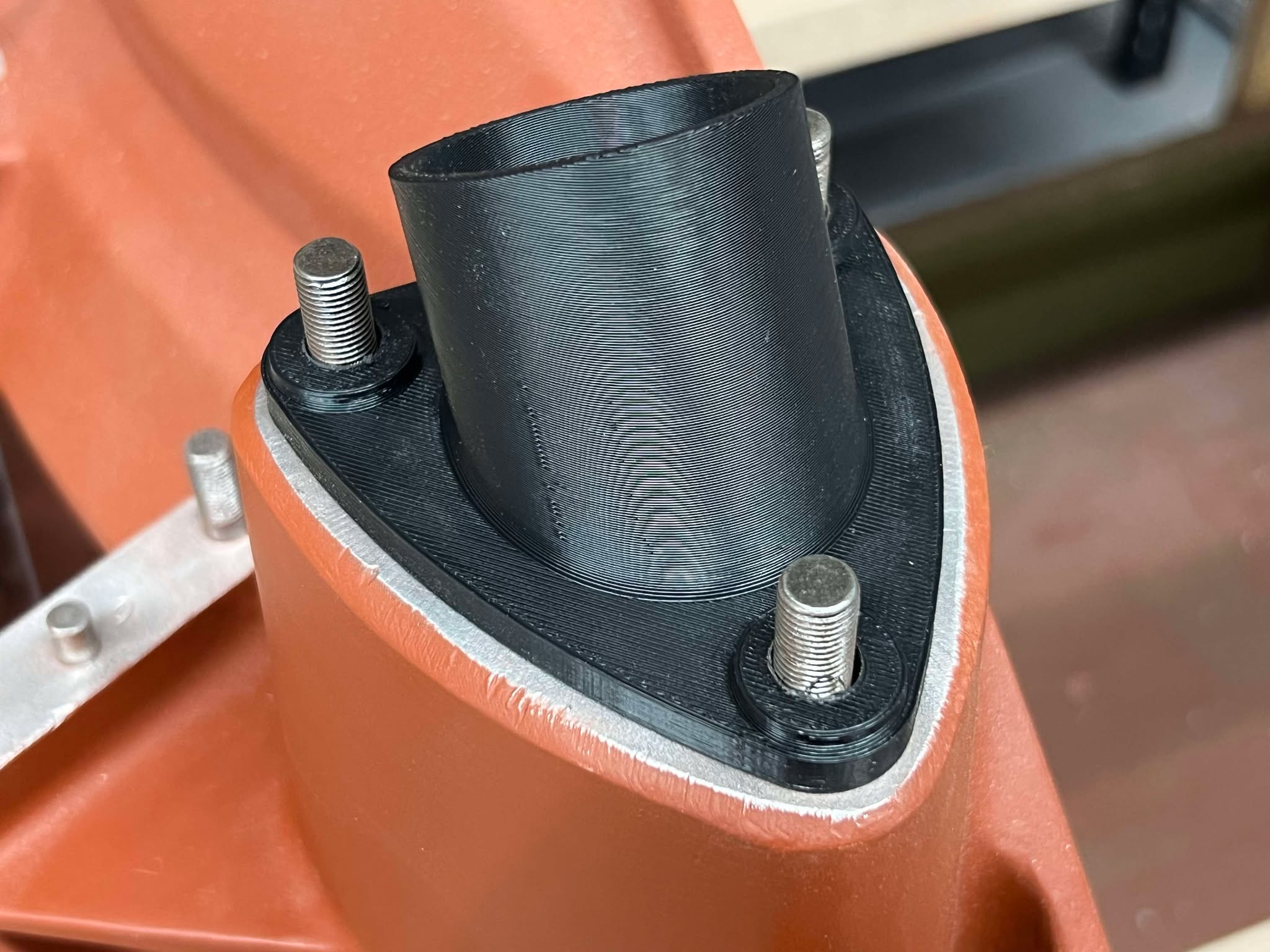
Photo taken 13 May 2025.
Having confirmed the measurements, the model then went to Bob Hachmann, who made some adjustments with the goal of having the piece milled out of a block of solid steel. Bob’s father, Vincent, was a ball turret gunner with the 384BG, and in his honor, actually paid to have this part CNC’d.
The finished piece arrived last month.
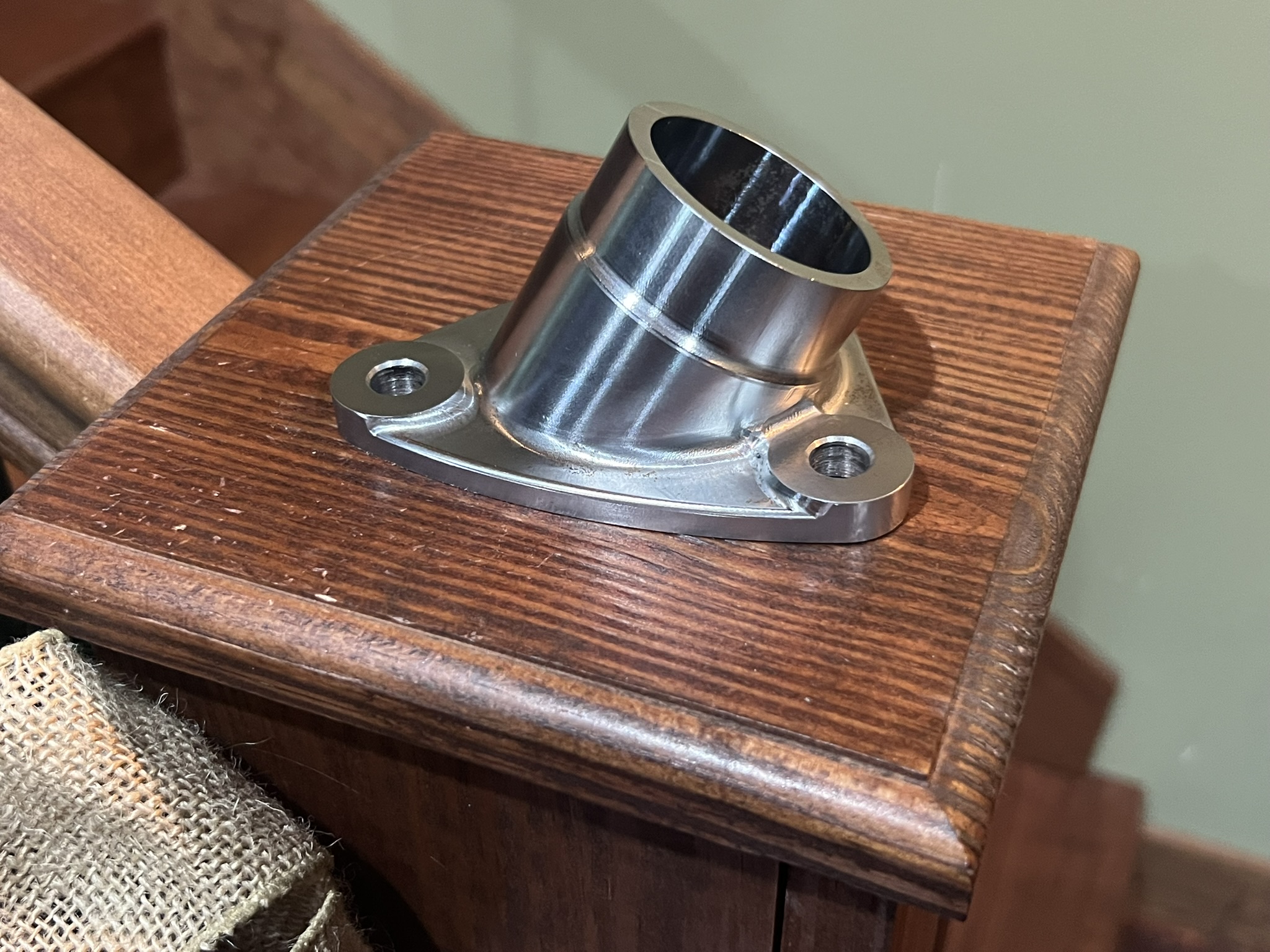
Photo taken 11 November 2025.
So, it was just a question of getting the trunnion, hanger, and foot to Ray so the missing leg could be replaced. The day after Thanksgiving, that is exactly what we did.
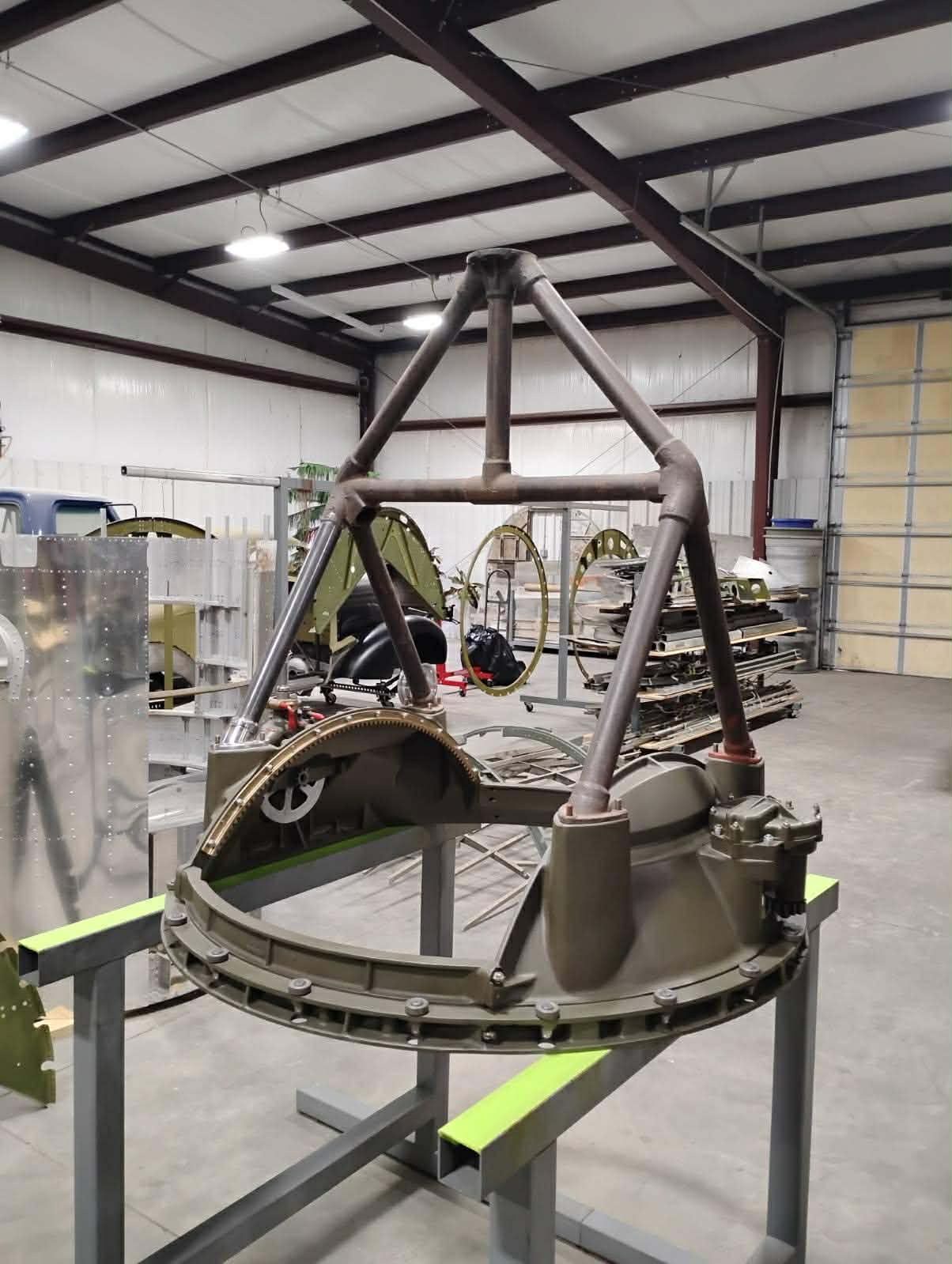
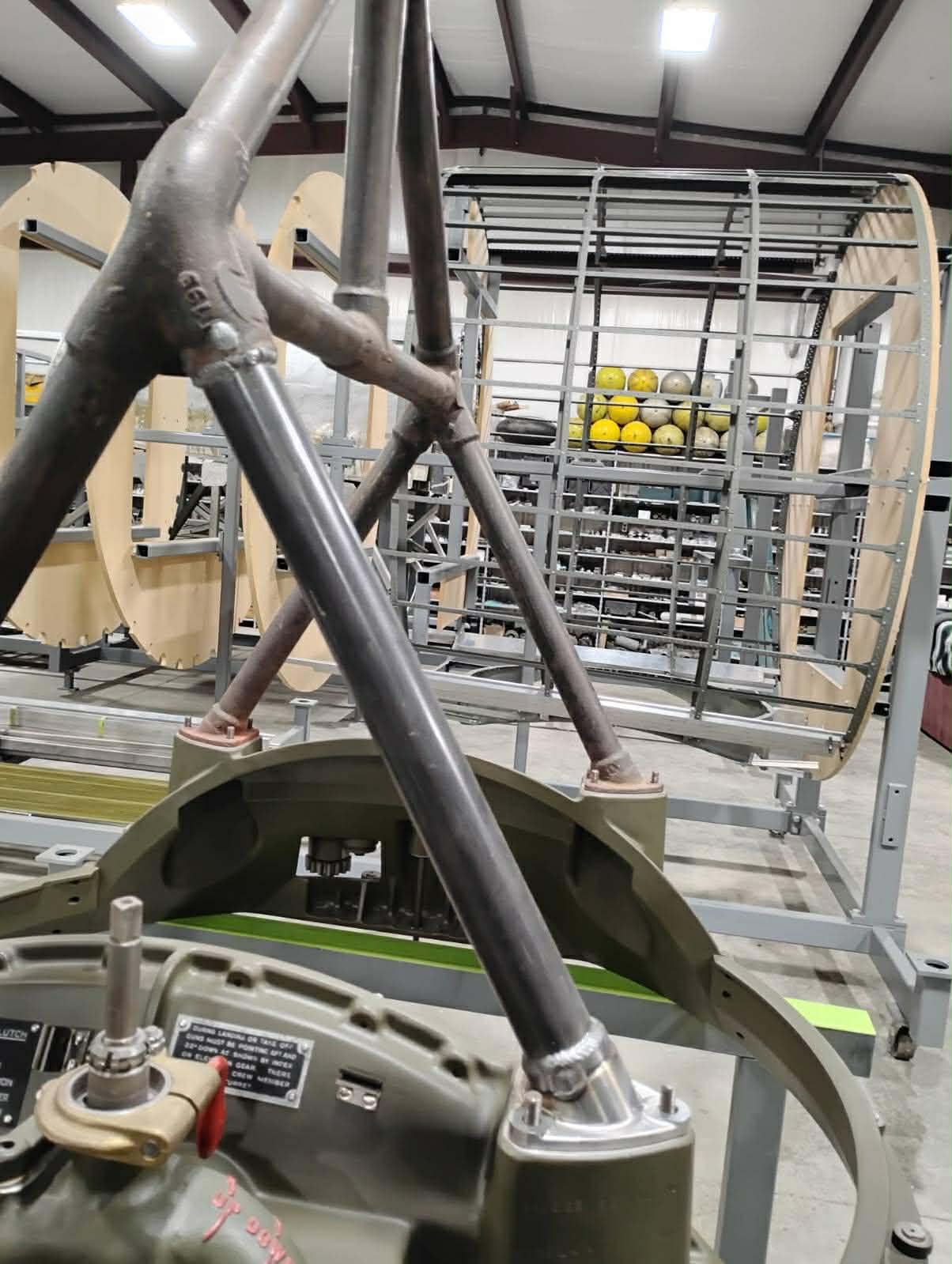
The new leg and foot are welded into place.
Photos taken 30 November 2025.
With the recent restoration of the turret’s brush holder, the brush holder was briefly set atop the hanger and trunnion for a photo op showing everything together for the very first time. It was an incredible sight!
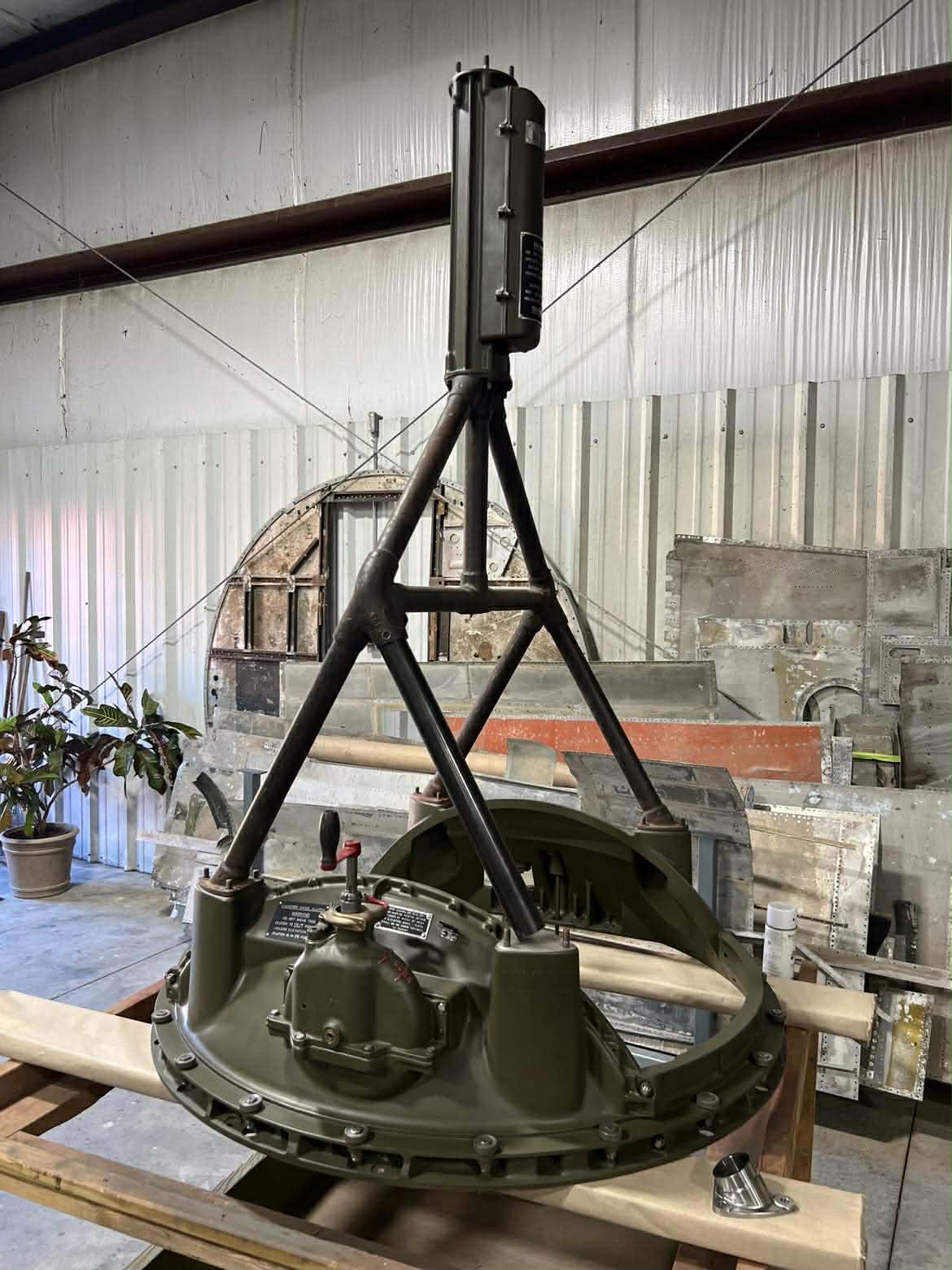
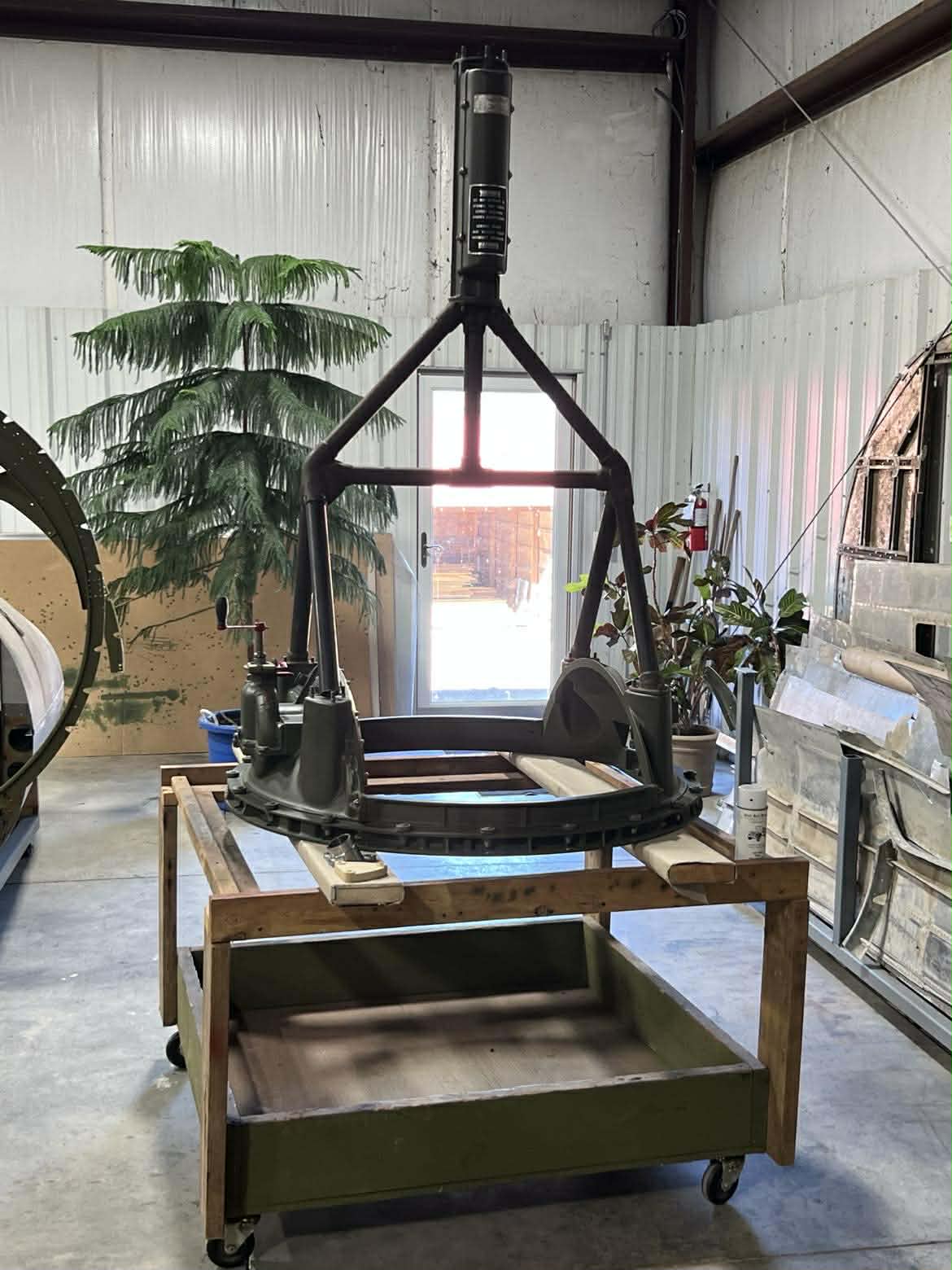
Volunteers are currently working to replace the missing spare parts box and oxygen tank mounting bands. (The tank itself is already restored, as is the trunnion.)
So, with the missing foot and leg now back on, the next step will be to refinish the hanger, after which it will return to my shop for wiring. More important however, is the ceiling mount and floor-mounted azimuth ring. Both of these entail the fixture on which the finished turret will hang.
Because we wish to restore this turret to operational status, we are entering new ground. None of the few surviving, functional ball turrets are Type A-2s. And because of the A-2’s large hanger assembly, its fixture will have to be quite massive.
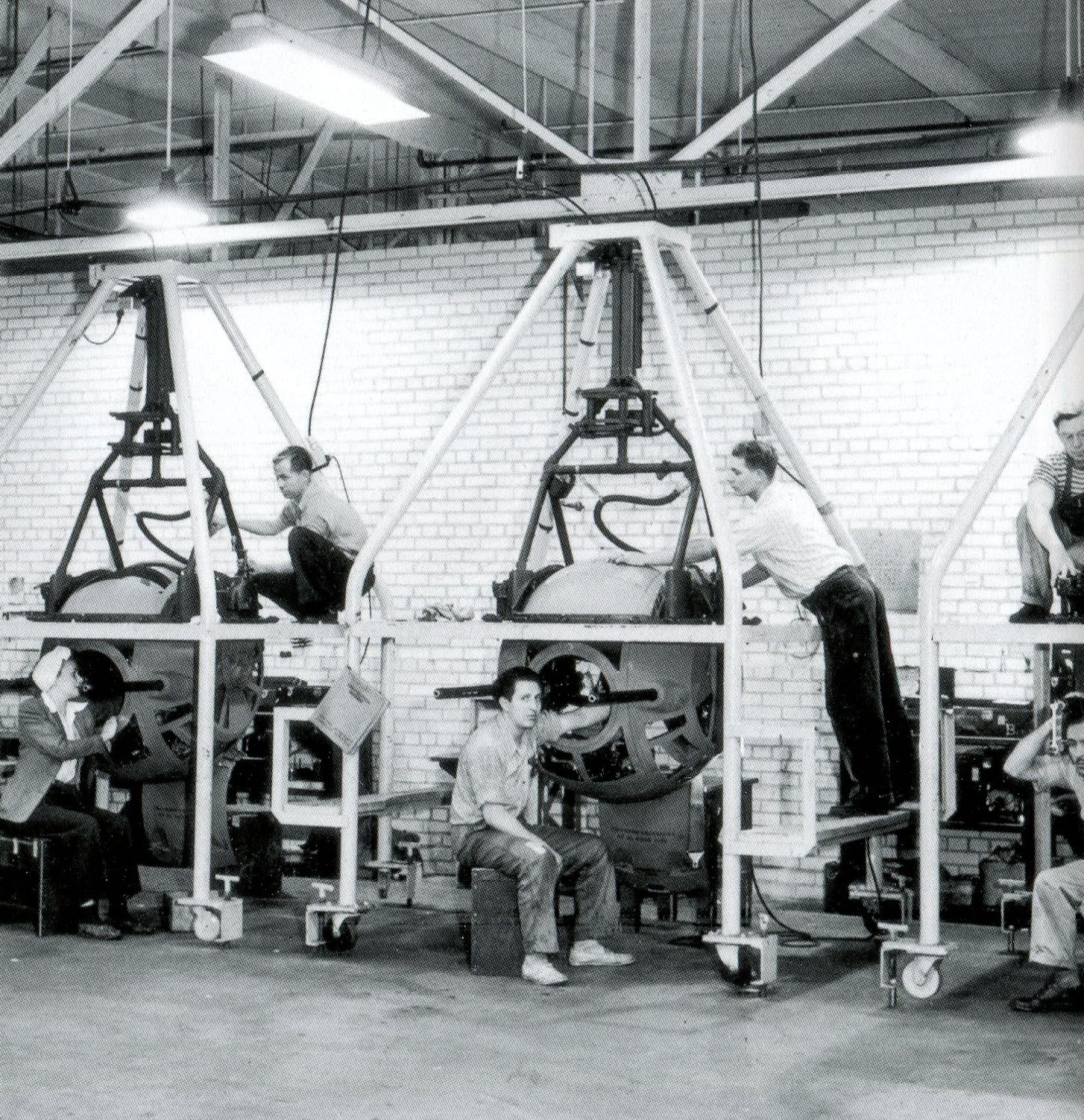
Briggs employees work on A-2 ball turrets at the factory in Detroit, Michigan. Note the size of the fixtures.
In the unlikely event that one of these fixtures still exist somewhere, please let us know!
The azimuth ring was a large brass hoop which mounted to the floor. The azimuth pinion gear on the trunnion interlocked with this ring, using its teeth to pull, rotating the turret as a whole. While our azimuth ring is in great shape, the cast aluminum brackets which attach it to the floor are in poor shape, so we are looking to replace all 24 brackets.
At the top of the turret, above the hanger and brush housing, was the ceiling mount. This was the piece which mounted the turret to the aircraft. Our piece, which came from midair collision of Dorsal Queen (42-30264) and Raunchy Wolf (42-3290) of the 385BG on 26 September 1943, is currently undergoing restoration. So far, we can see one major issue: the connector box for feeding the aircraft’s electrics into the ball was sheared off in the crash.
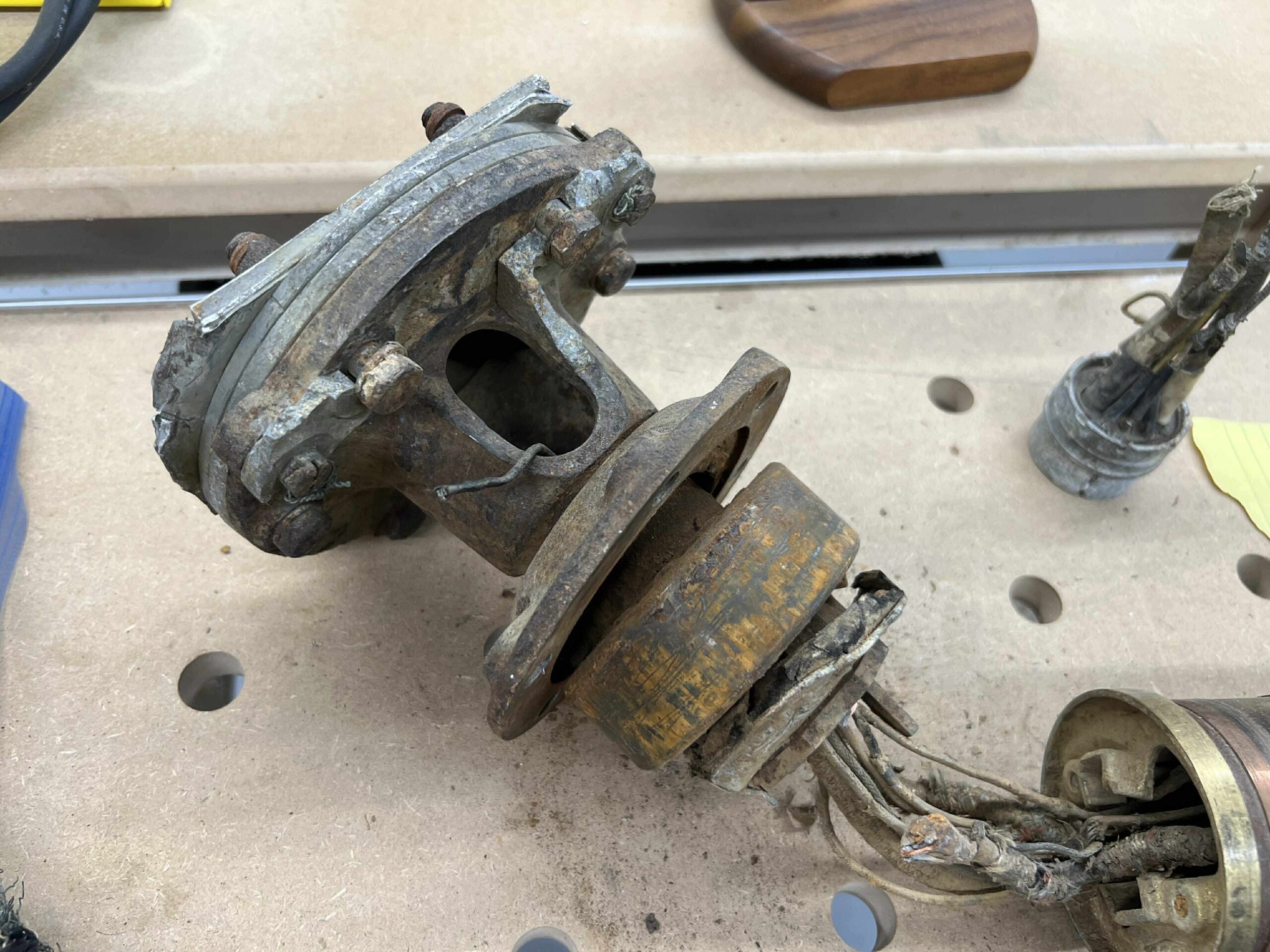
The ceiling mount for the A-2 Ball Turret. The hole you see here is where the electrical lines enter the turret from the aircraft. The remains of the bracket which protected this hole are also visible.
This bracket held a triangular box, the inside of which served as a connector board, the aircraft’s lines plugging into the board, powering the turret.
So, unless an original becomes available, we will need to recreate these pieces.
The issue is that there are only three out there that the we are aware of: on Memphis Belle (41-24485, 91BG) at the National Museum of the US Air Force, on Shoo Shoo Baby (42-32076, 91BG) at the Smithsonian Steven F. Udvar-Hazy Center, and on Sentimental Journey (44-83514) of the Commemorative Air Force.
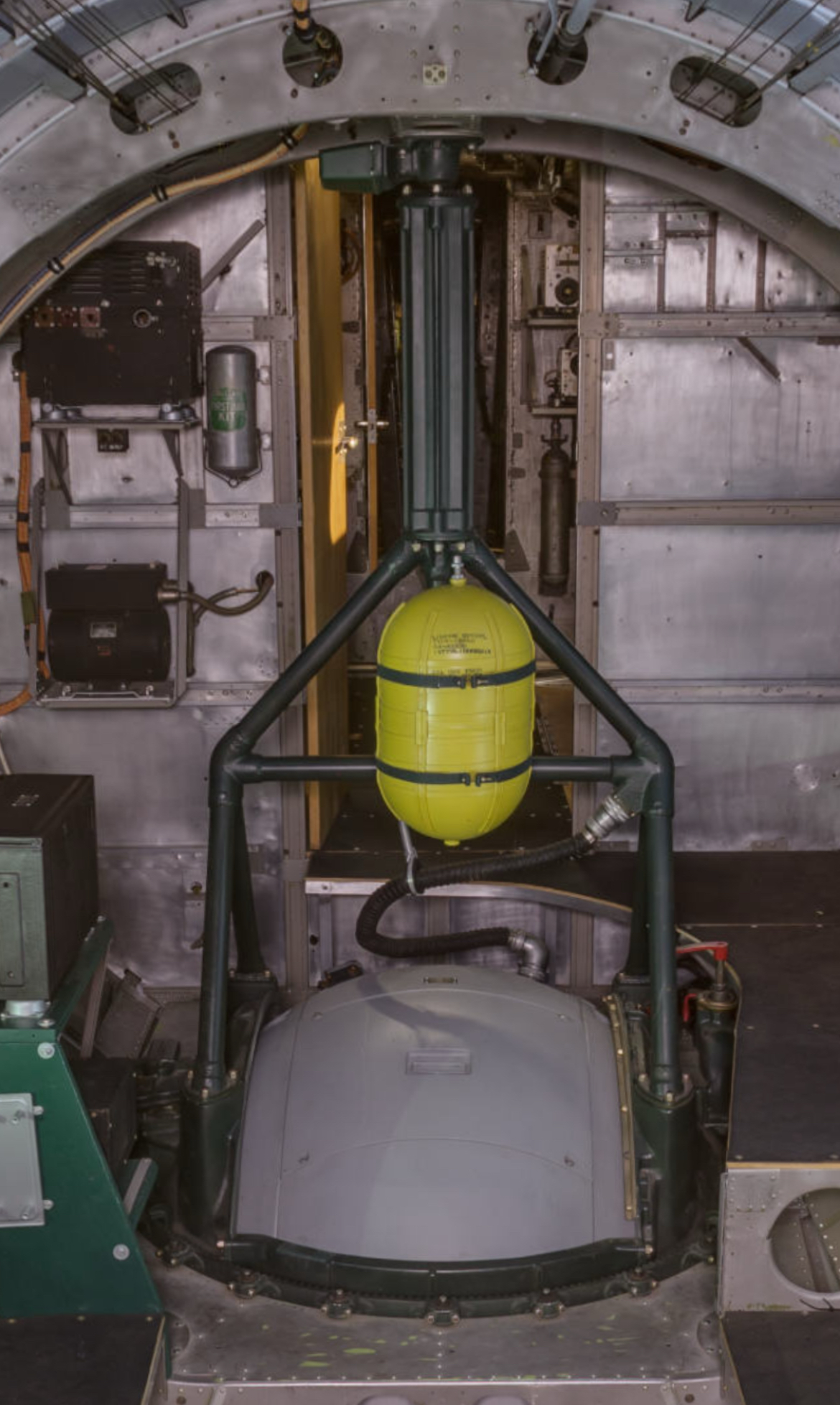
The A-2 Ball Turret aboard Memphis Belle. The piece missing from Lucky Thirteen‘s turret is visible at the top left.
Incidentally, of the three previously noted, Memphis Belle is the only one wherein an A-2 is accurate, the other two originally carrying A-2As. While Memphis Belle is one of the finer B-17 restorations attempted thus far, her A-2 is somewhat problematic, being painted up like an Emerson-made ball, despite actually being a Briggs. (I.e., her interior should be gray and hanger/trunnion olive drab, instead of both being dark green.)
We have reached out to Sentimental Journey and, from the pics we have received thus far, the connector box on her ceiling attachment appears somewhat nonstandard. It may be an amalgamation of variants from when it was originally restored, as the ball on said turret is from an A-13A, for example.
Memphis Belle would be the ideal reference, seeing as her ball has been in place (for the most part) since the war. Unfortunately, our connections to the museum drifted away with staff changes, and her being elevated off the floor just makes the task all the more difficult.
So far, we have not heard back from the Smithsonian.
But we’ll make do!
In other news, we have a new VHF antenna for Lucky Thirteen!
As mentioned in our previous update, we recently commissioned artist Juanita Franzi to create a new profile artwork of Lucky Thirteen. In the course of her research, she came across some antenna details that we had missed. One of these was the aircraft’s VHF antenna.
Because Lucky Thirteen was a B-17F, she did not leave the Boeing factory with a VHF system installed. This radio was instead installed at a modification center. That being the case, our understanding of the VHF equipment was based on a combination of period photos and installation drawings from B-17Gs – which is why the antenna we initially restored was an AN-104-A.
Juanita noticed in her research however that the profile of the mast antenna on several B-17F photos did not seem to match the AN-104-A. Turns out, the AN-104-A was the wrong antenna. But what was the right one? The AN-73, AN-74, and A-104 all looked a great deal like one another. Fortunately, we found the answer in the April 1943 edition of the Airborne Radio Equipment Handbook. While the booklet is quite simplistic in detail, it does identify the correct VHF mast for the B-17F: the AN-74. This information allowed us to dig further, discovering that the AN-104-A was a replacement for the AN-74 and its sisters, as the latter were cancelled on 1 January 1944 due to “inadequate mechanical strength.”
So, we have replaced our AN-104-A antenna with the correct AN-74.
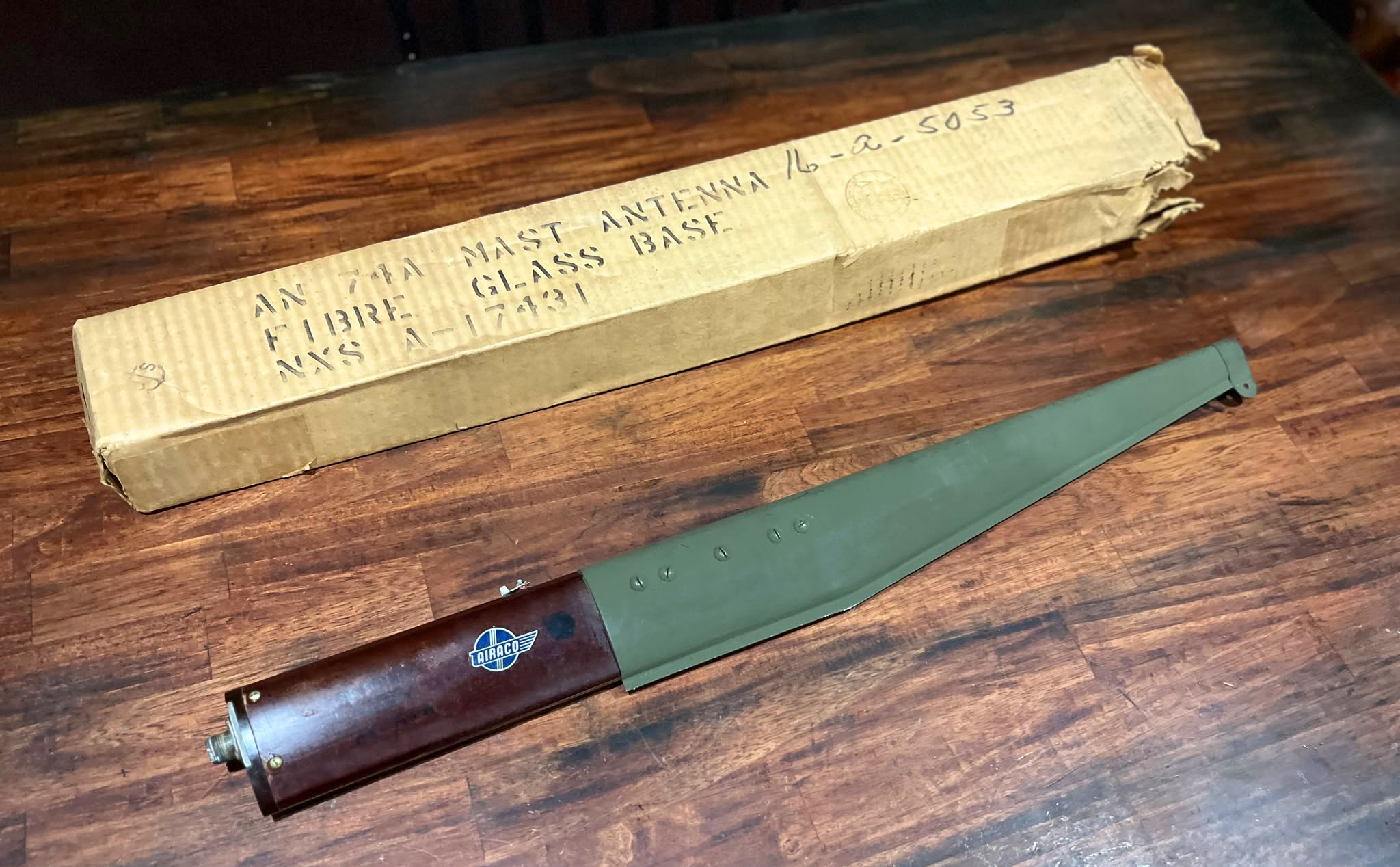
The newly arrived AN-74 antenna.
This example is NOS made by Airaco. Short for “Aircraft Accessories Corporation,” the company changed its name to Aireon Manufacturing in 1944. After the war, Aieron switched to producing jukeboxes before quickly falling into bankruptcy, the Reconstruction Finance Corporation (an FDR-created government bailout office) selling its assets in 1951, covering the rest of Aieron’s debt with tax-payer money.
True to the Army replacement order, the AN-74 is noticeably lighter than the AN-104-A.
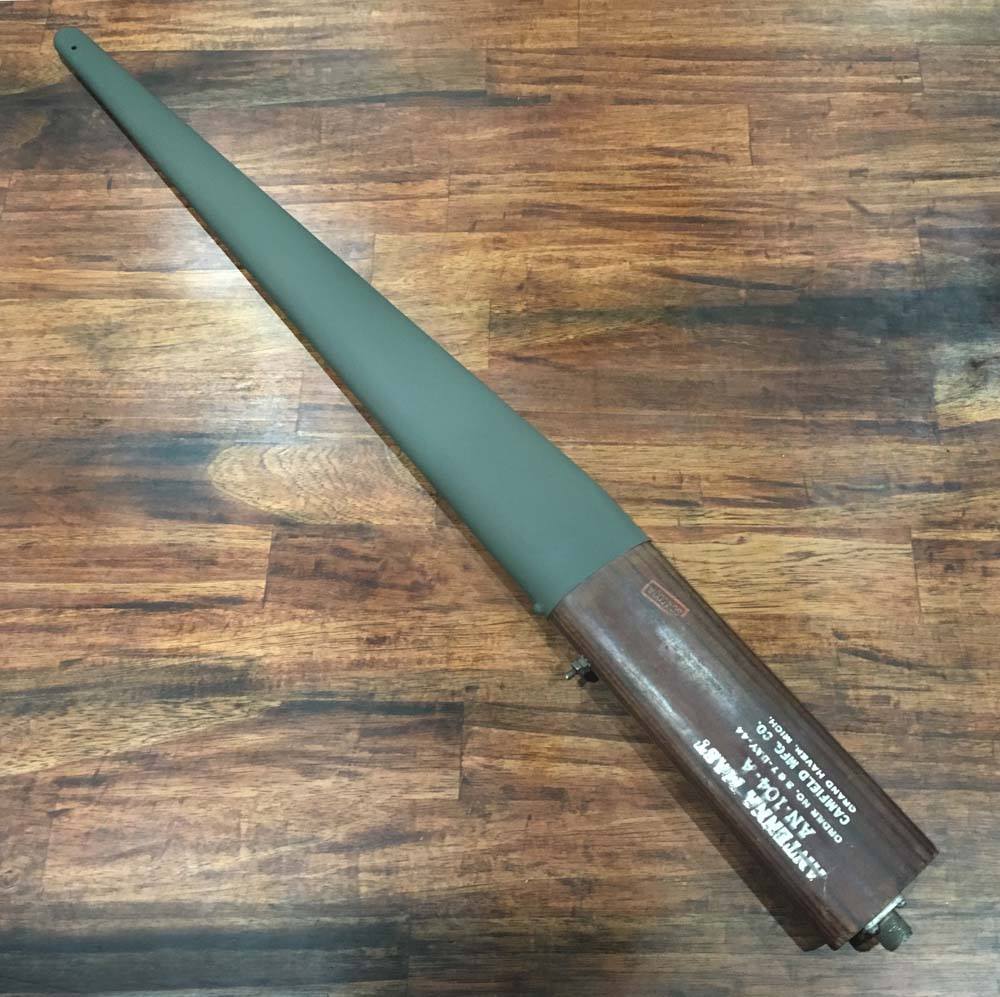
The AN-104-A we restored back in 2019.
Made by Camfield Manufacturing of New Haven, Michigan (a kitchen utensil company), the latter AN-104 series came in three variants: Army (-A), Navy (-N), and postwar replacement (-B).
Now that it is excess to our needs, we would be happy to trade or sell this piece. Just let us know!
Photo taken 10 January 2019.
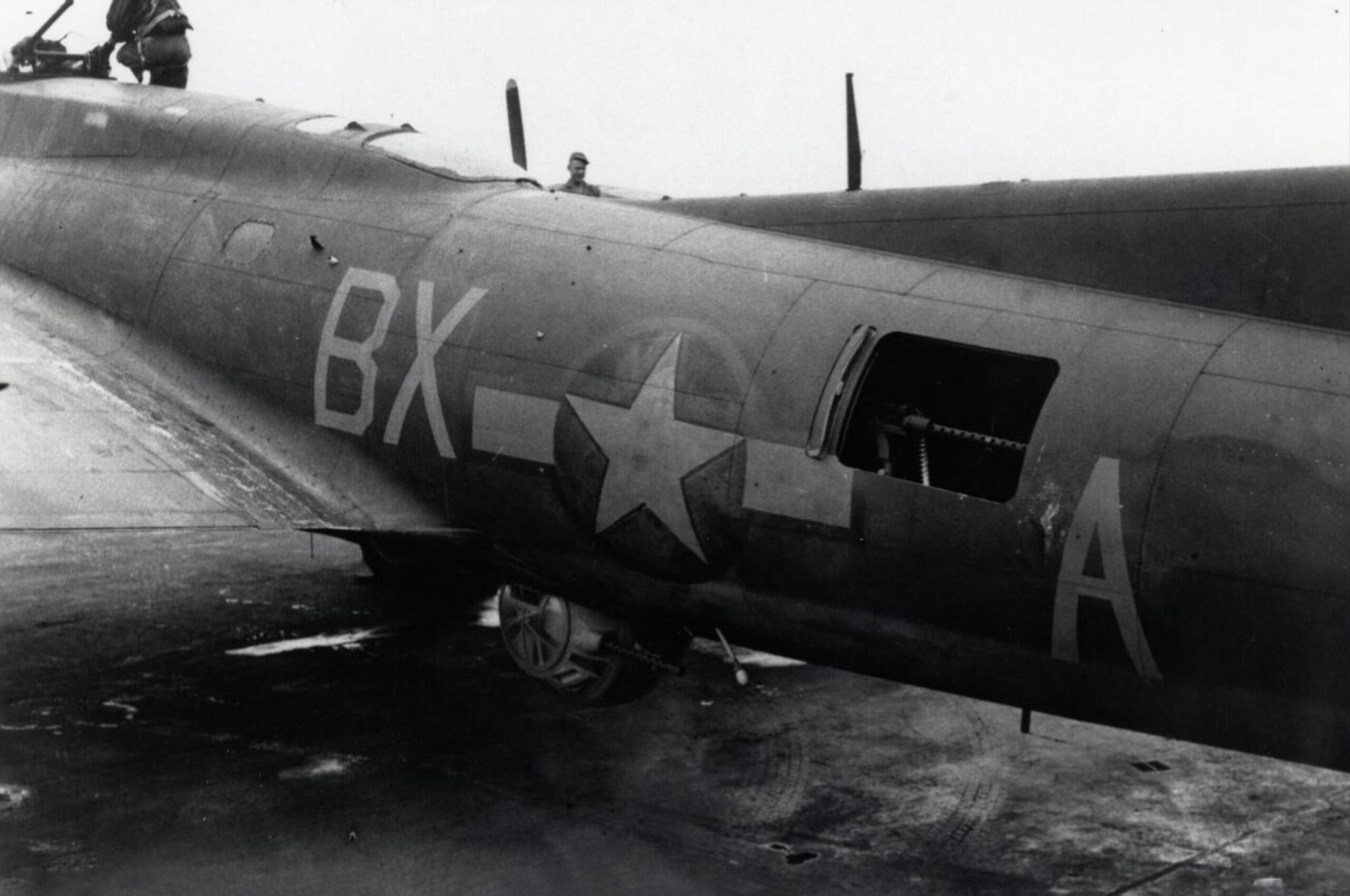
The VHF antenna on Fertile Myrtle 3rd (42-30366, 96BG). The characteristic sharp angle and rounded fin at the top shows that this is an AN-74 rather than an AN-104-A.
Piloted by CO 4BW COL Curtis E. LeMay, Fertile Myrtle 3rd is particularly noteworthy as the lead aircraft of the infamous Schweinfurt-Regensburg strike of 17 August 1943. Lucky Thirteen was a participant in this operation and when completed, will be the sole example of this vicious campaign. Severely damaged over Bremen on 16 December 1943, Fertile Myrtle 3rd was nursed back to the UK before being abandoned over Norfolk.
Photo taken 17 September 1943.
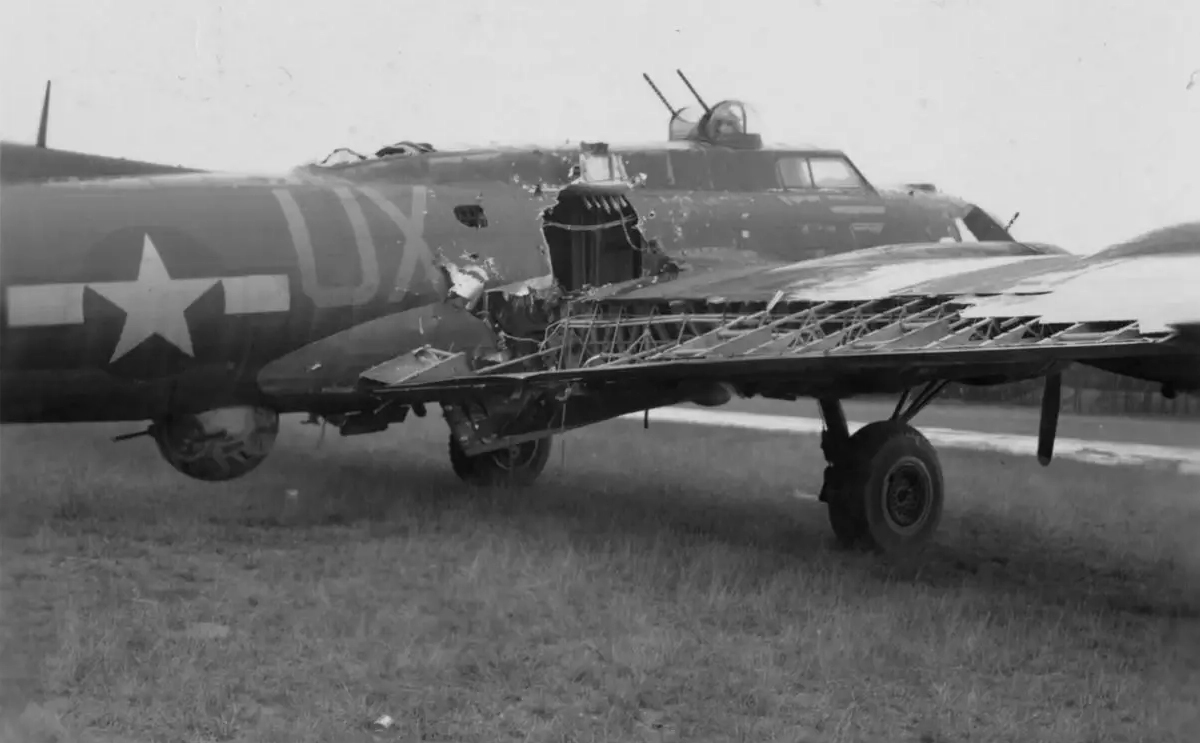
An extreme example of the B-17’s rugged design, Snake Hips (42-31713, 92BG) limped home after AAA hit the bomb bay and started a fire over Merseburg on 24 August 1944. Ball turret gunner SSGT Gordon V. Wescott was killed and radio operator TSGT Bishop E. Ingraham severely wounded.
Note the antenna – this aircraft carries an AN-104-A VHF antenna.
The Hangar Thirteen Foundation is a 501c3 nonprofit charity dedicated to bringing back a B-17F representative of the bloody counter-air campaign of June 1943 through March 1944. Donations to this project are tax deductible. If you can spare a little to help this project, you can guarantee that you will see the results on Facebook and here on our website.
You can contribute through the Donate page or, to avoid a PayPal fee, you can send something via the mail to:
Gerad Allen Blume
Hangar Thirteen Foundation
442 Old Chalk Bed Road
Batesburg, SC 29006
Volunteers are also always welcome. In fact, you need not be an Asheville resident – you can work from home! Persons skilled with metal fabrication, machining, CAD modeling, metal casting, 3D scanning, and laser/waterjet cutting, are particularly helpful. Just reach out to us to get started.
Keep the show on the road!