
So, the long hiatus between updates is easy to explain: Eric and I have just returned from a joint Hangar Thirteen/Project Warbird expedition to California. Delivering parts, picking up parts, meeting people and making friends; it was an incredible adventure. And I am currently putting together an in-depth review of the trip.
In the meantime, I wanted to share some recent updates on Boeing B-17F Lucky Thirteen.
Just before leaving, I managed to complete restoration of the ball turret’s trunnion assembly. As such, attention now turns to the turret’s hanger and brush assembly. The hanger is missing a leg, which is easy enough to replace, but the foot is a bit more difficult. A replacement is currently being fabricated.
The brush assembly comes from Dorsal Queen (42-30264) and Raunchy Wolf (42-3290) of the 385BG, who suffered a mid-air collision over RAF Great Ashfield on 26 September 1943, upon returning from a strike. This event occurred just twenty days after the loss of Lucky Thirteen. Otherwise relatively complete, the brush housing was badly dented.
So, while Eric and I were away, Ray worked to repair the damaged housing. Now I am free to refinish this piece and begin wiring the turret.
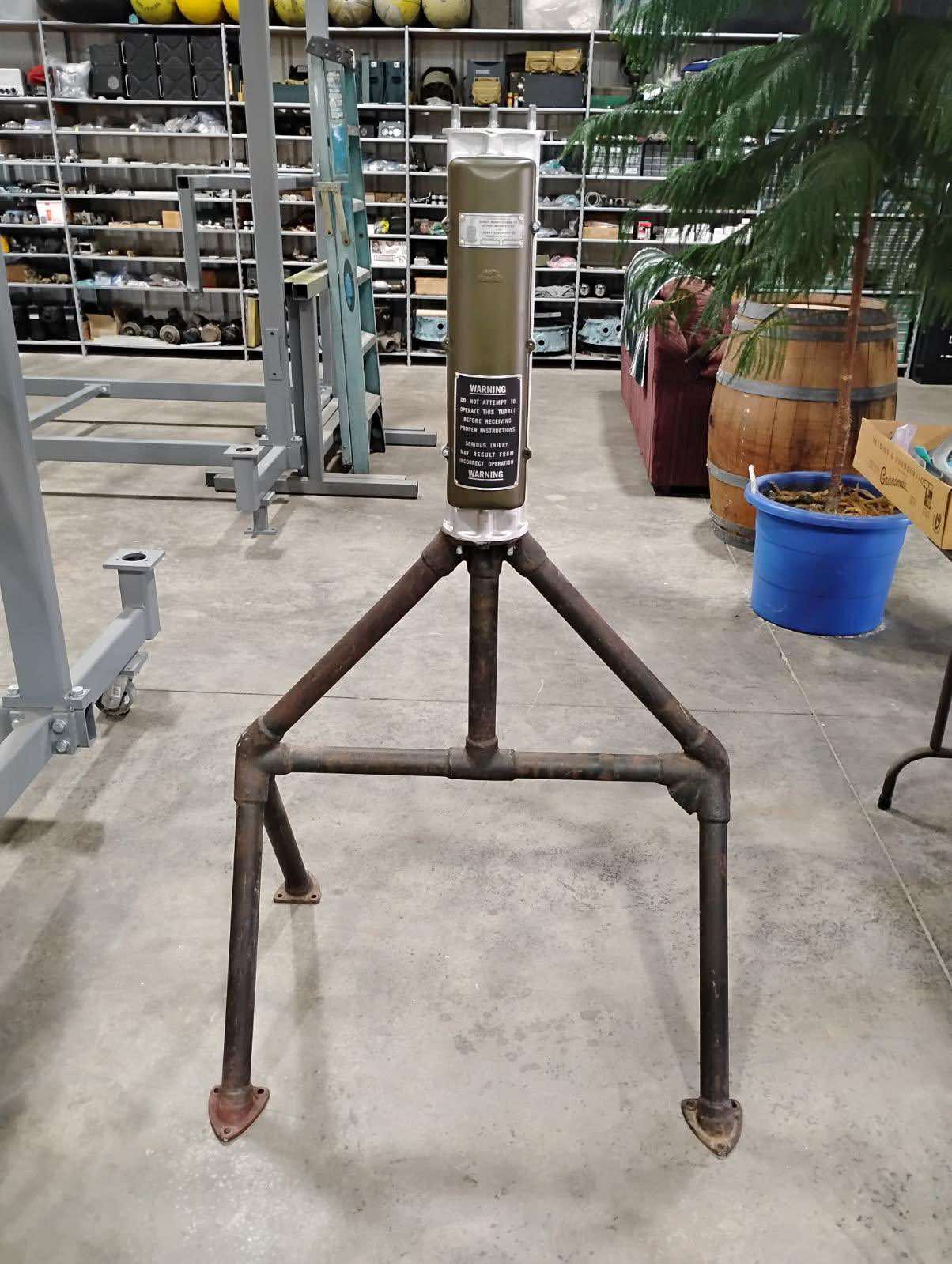
The restored cover plate is test fitted over the newly repaired brush assembly.
Photo taken 24 August 2025.
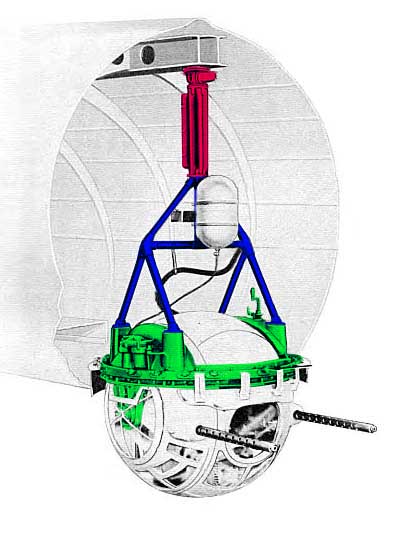
Manual illustration color-coded to help explain what we are talking about.
The red area is the turret’s brush assembly. This is where electrical power, generated by the aircraft’s engines, enters the turret.
The blue area is the hanger assembly. Whereas the majority of the turret is made from cast aluminum, this assembly is made of steel.
The green area is the recently restored trunnion assembly, which holds the ball.
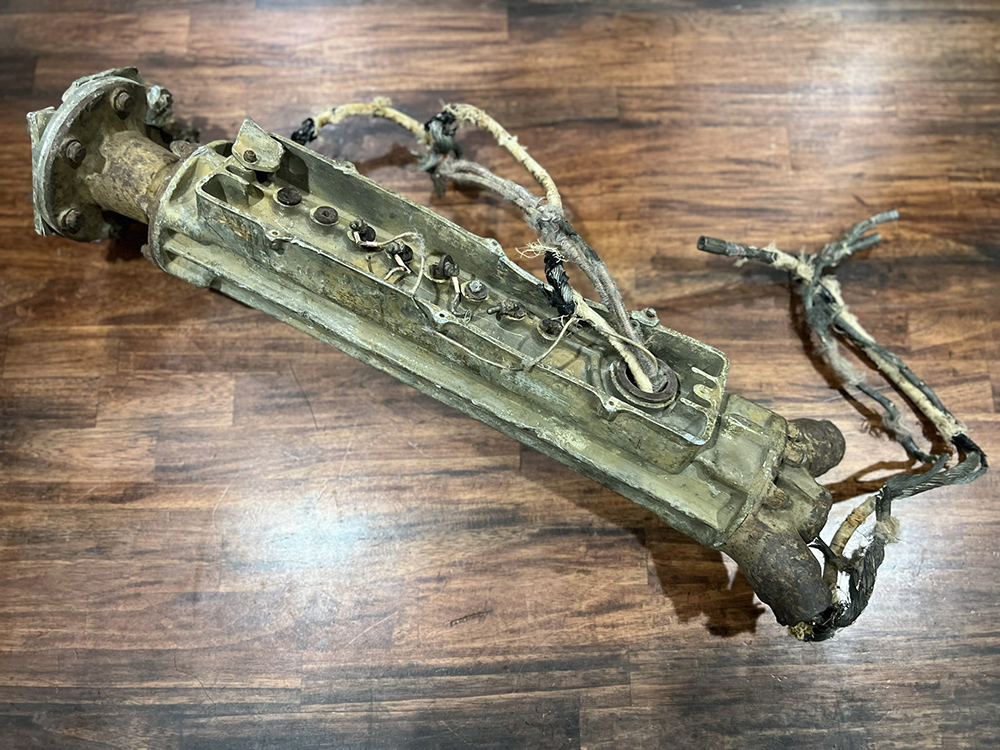
The brush assembly for the ball turret upon arrival.
We are not sure from which of the two aircraft this piece comes from.
This piece is off a Briggs-made turret, the same type carried by Lucky Thirteen.
Photo taken 11 June 2023.

The brush assembly stripped for restoration along with the cover plate, shortly after purchase.
The large brush housing was unique to the Type A-2 Ball Turrets found on E and F-model B-17s. The brush assembly is upside down in this photo.
Photo taken 17 July 2023.
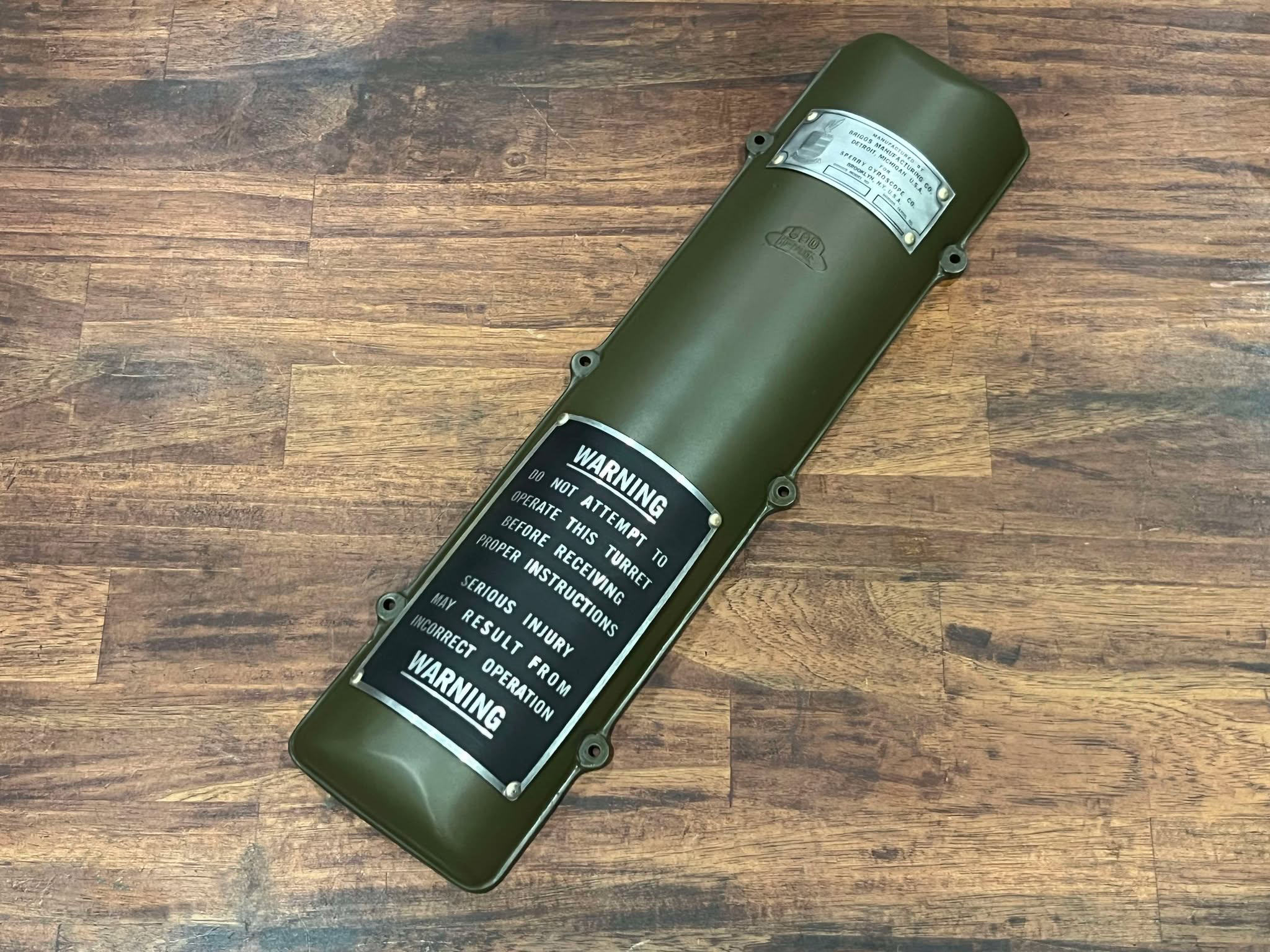
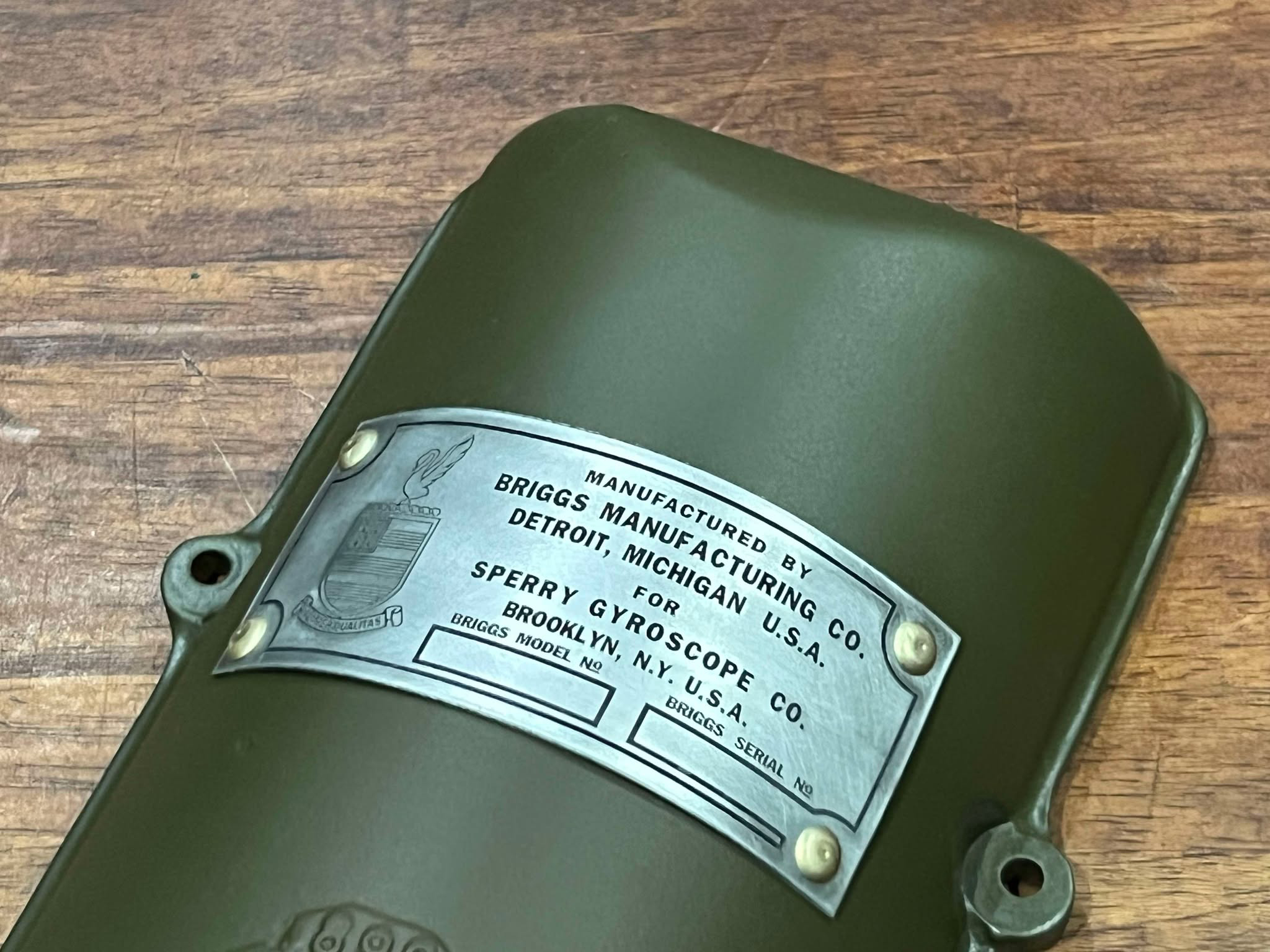
The restored brush assembly cover plate for Lucky Thirteen‘s ball turret.
The turret’s dataplate is located at the top.
Photos taken 6 June 2025.
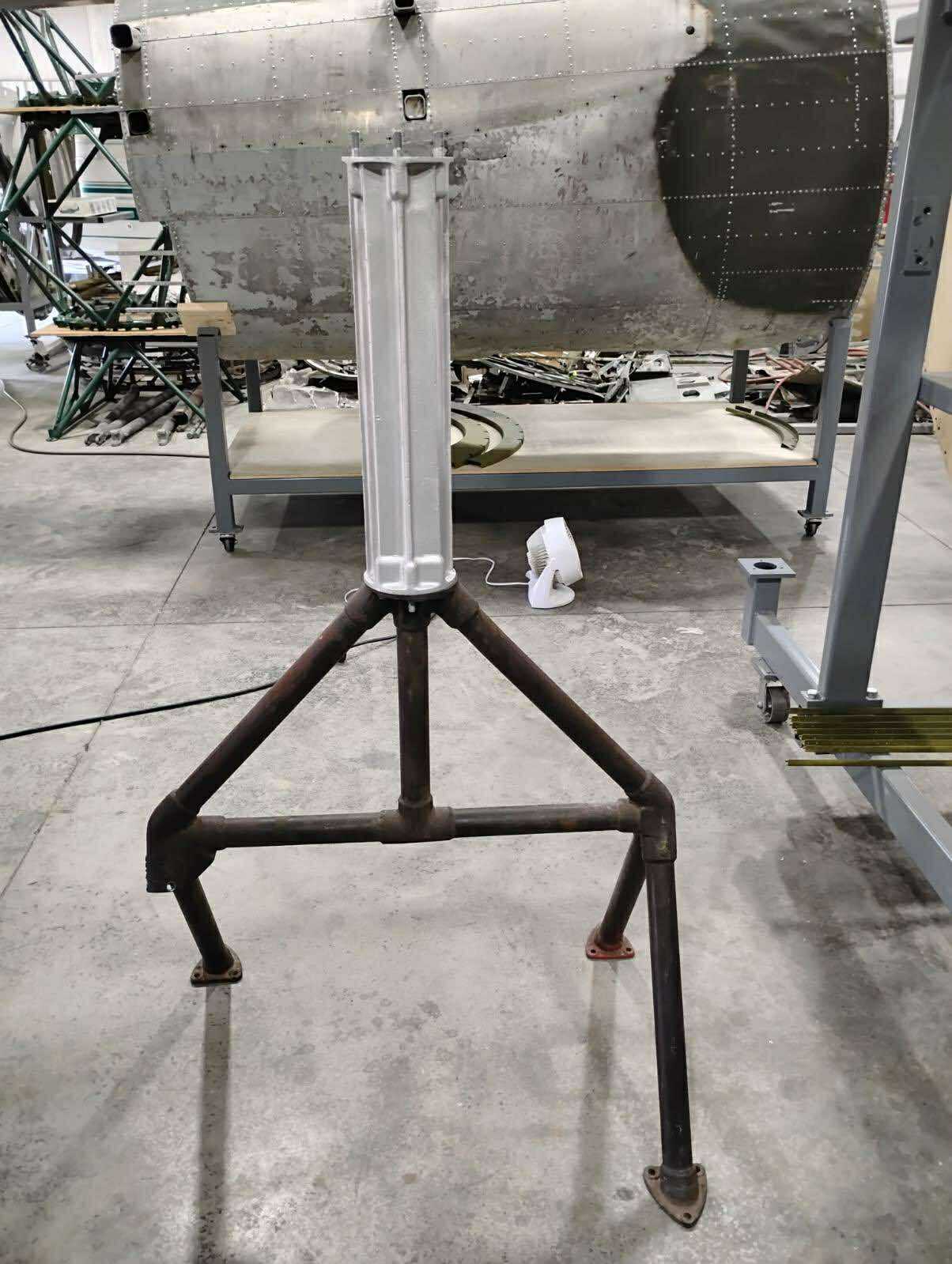
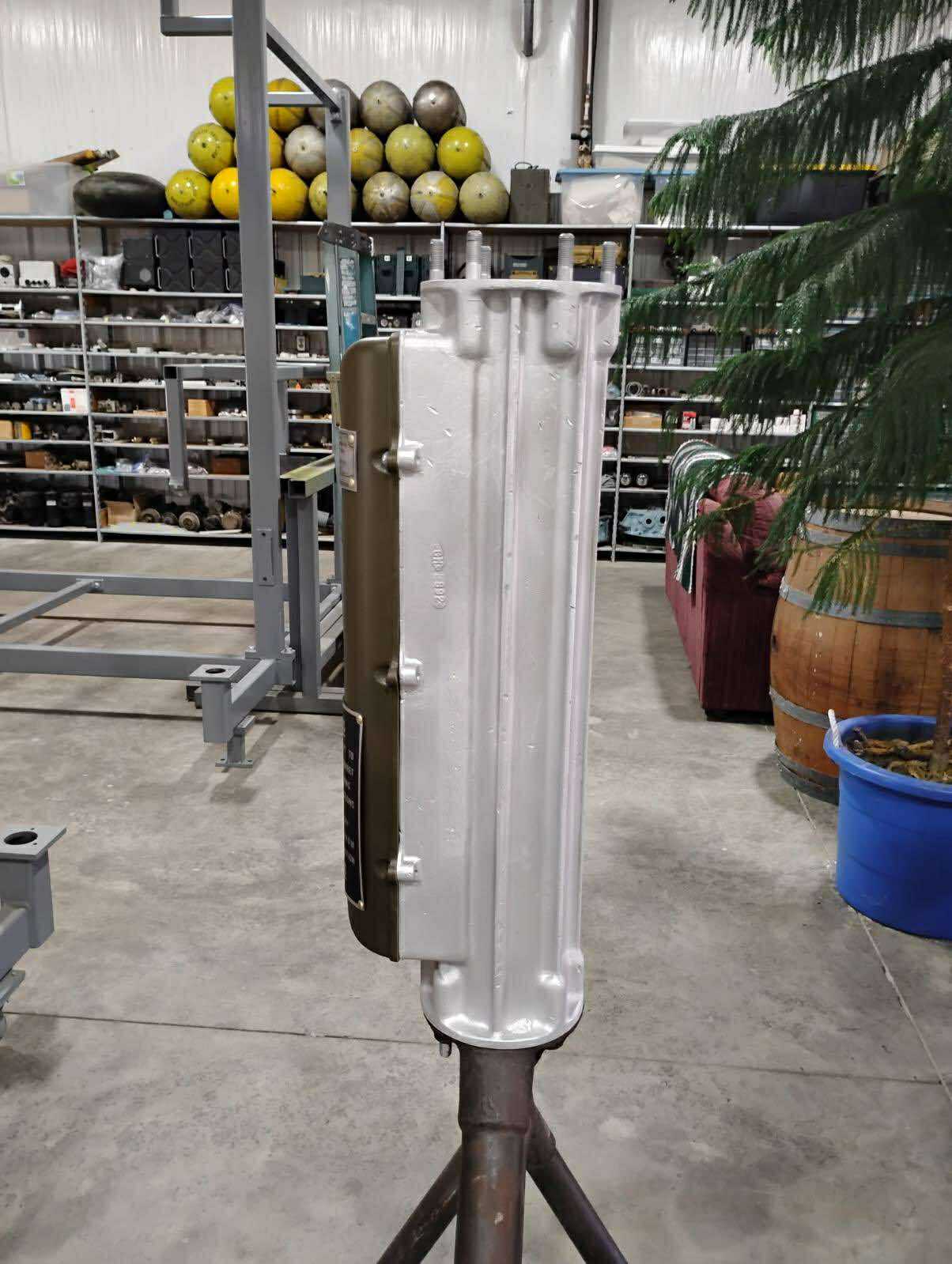
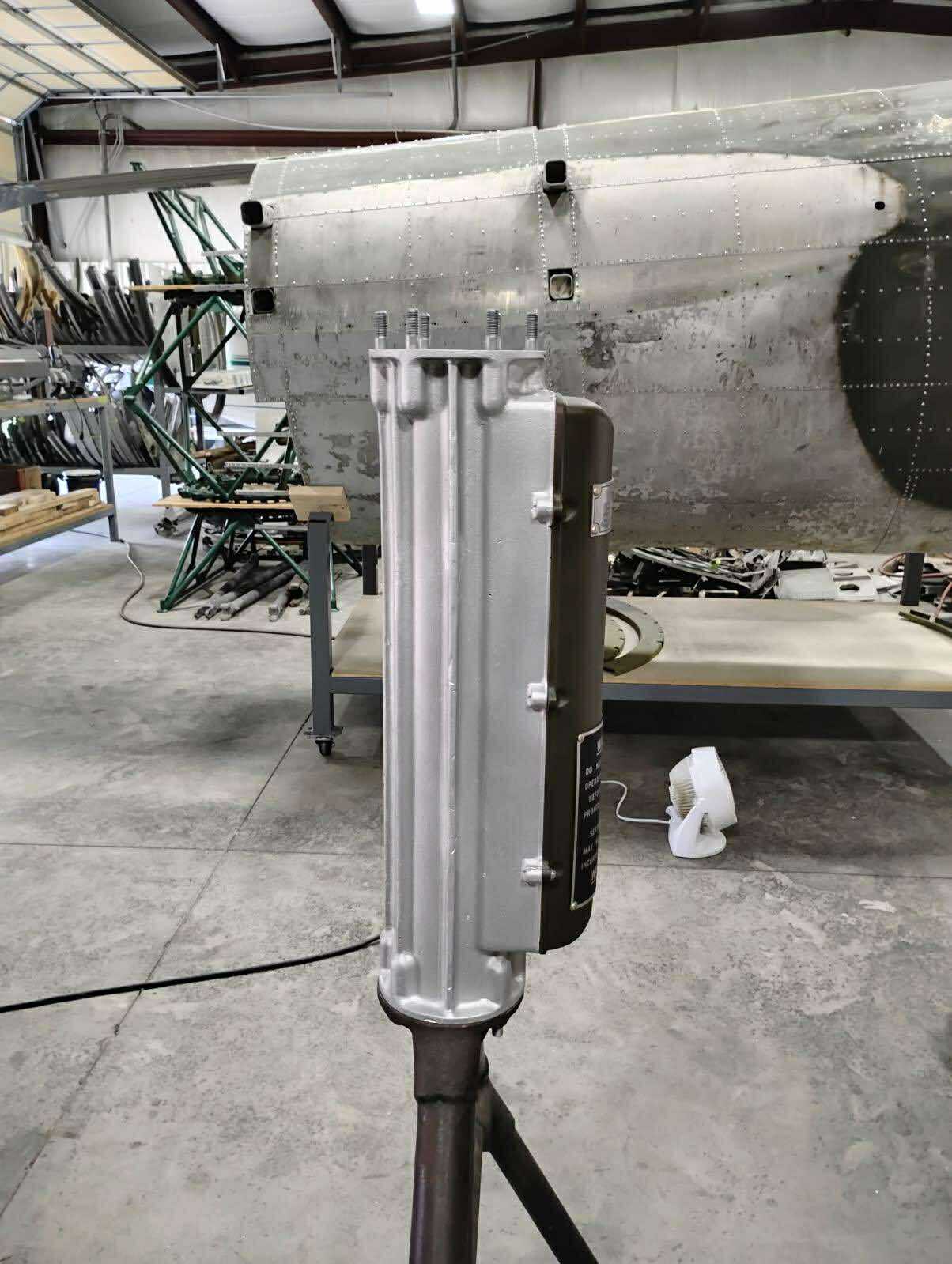
The restored cover plate is test fitted over the newly repaired brush assembly.
Photos taken 24 August 2025.
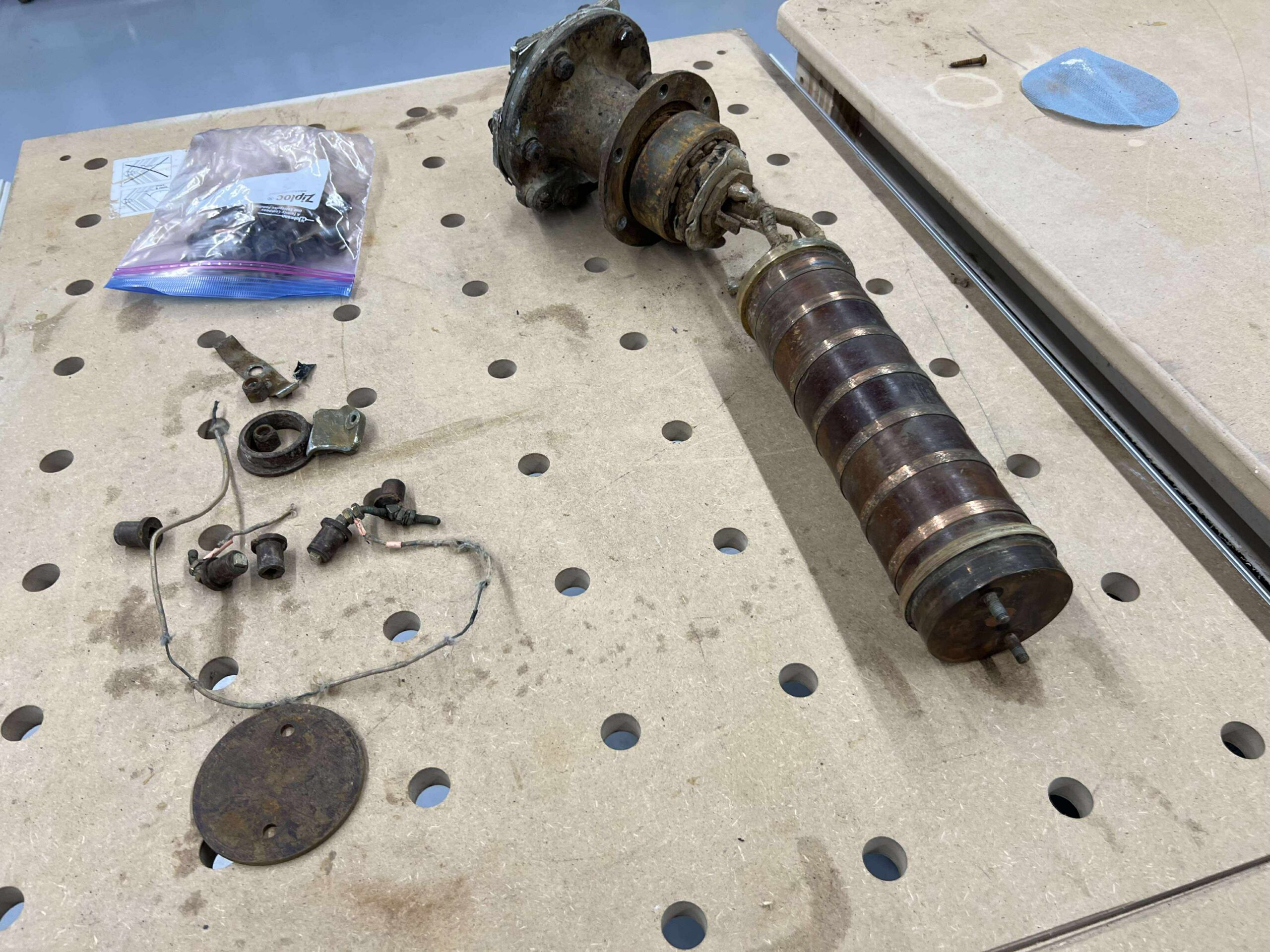
The innards of the brush assembly removed for restoration. To explain:
Cables for the turret’s power and intercom are fed into the turret through this piece, connecting to a series of bands on the cylinder. Small rods “brush” against these bands as the turret rotates, feeding the signal down into the ball through the large conduit connected to the hanger.
The piece above the cylinder is the mount which hangs the turret from the aircraft’s ceiling.
Photo taken 20 August 2025.
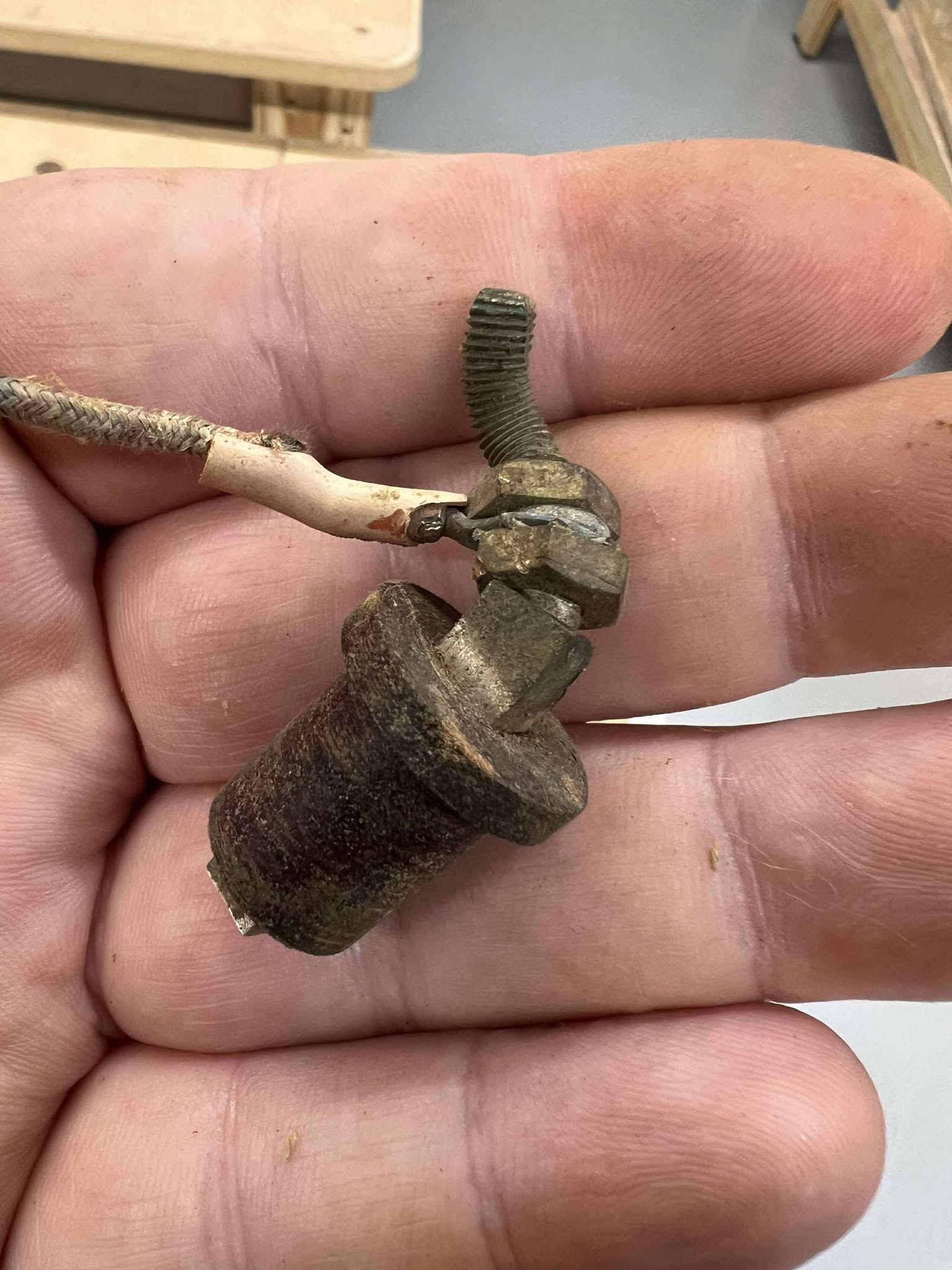
One of the ball turret’s brush rods from the mid-air collision. There were eight brush rods in total, two being for large capacity wires and six for low-capacity wires.
The rod is held square against the bands using a phenolic bushing. When installed, a cover bar helps hold all the rods in place.
Photo taken 20 August 2025.
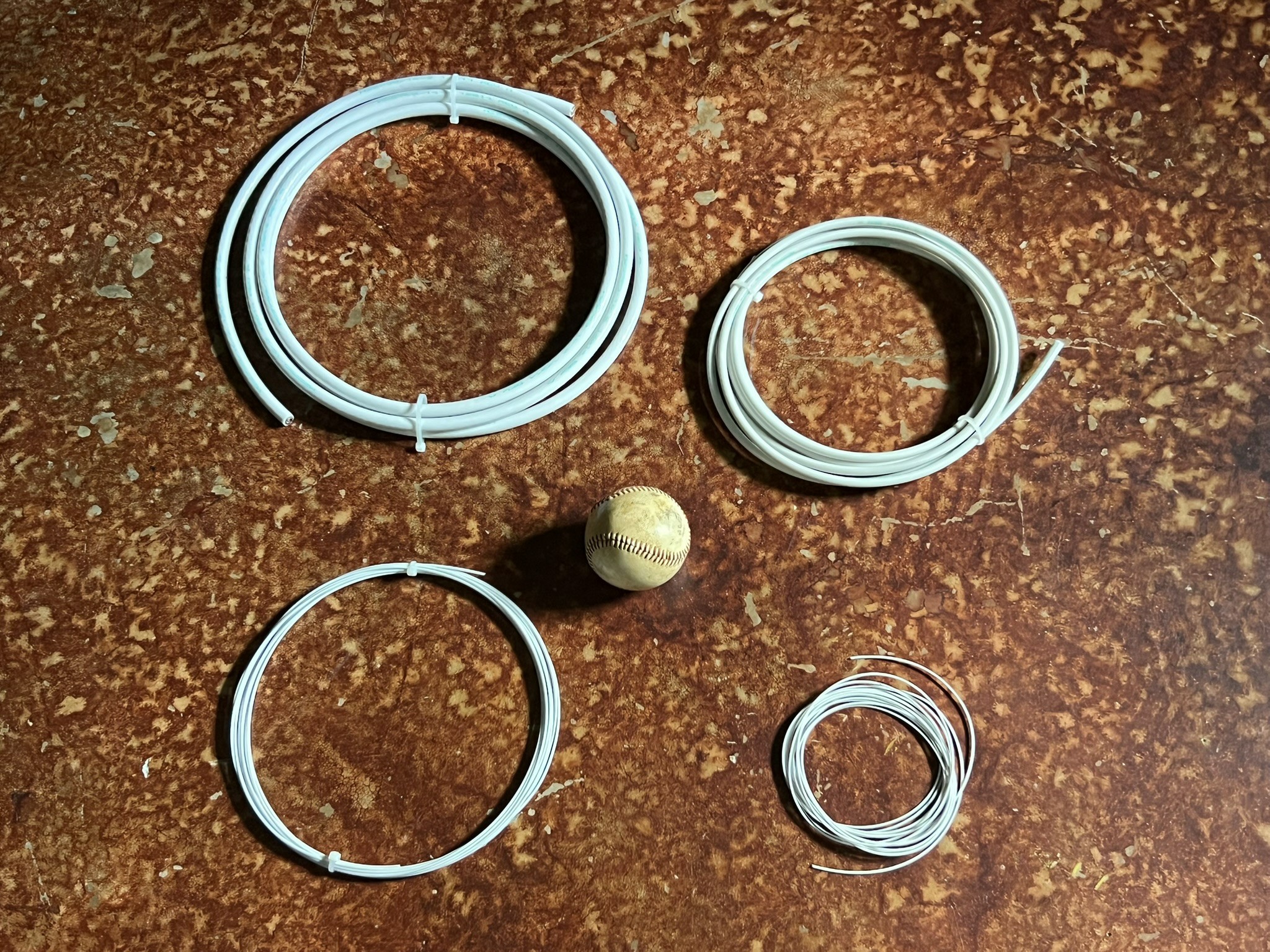
The wires needed to complete the wiring on the A-2 Ball Turret for Lucky Thirteen. Baseball for scale.
Special thanks to Thomas Schasney for this incredible donation!
Photo taken 1 August 2025.
A recent arrival for the project, we now have a NOS plexiglass window for Lucky Thirteen‘s waist hatch.
The main entrance to the aircraft, there were actually two variants of the waist hatch.
For much of the B-17’s service life, the door was a “built-up” type, being backed by a large frame assembly. Today this variant is no longer common, as the vast majority of surviving B-17s are late-G variants. These aircraft used a thinner door, whose backing was stamped. Said variant entered service in block G-20-BO. As such, it is likely that we will have to fabricate the waist hatch for Lucky Thirteen.
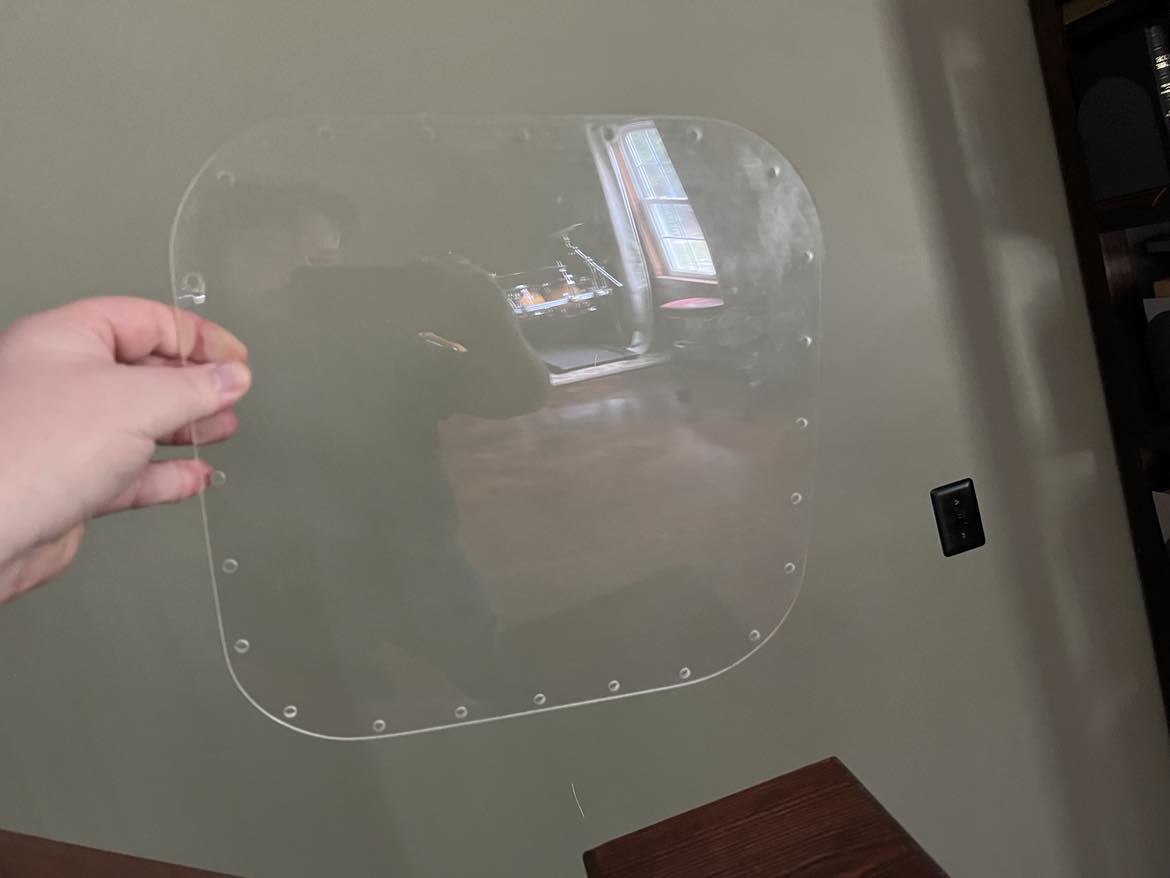
It is never easy to photograph a clear object!
Special thanks to Nathan Smith of the Iowa Military Aviation Museum, who graciously cleaned the original protective coating before sending this piece. It is in perfect condition.
Photo taken 22 July 2025.
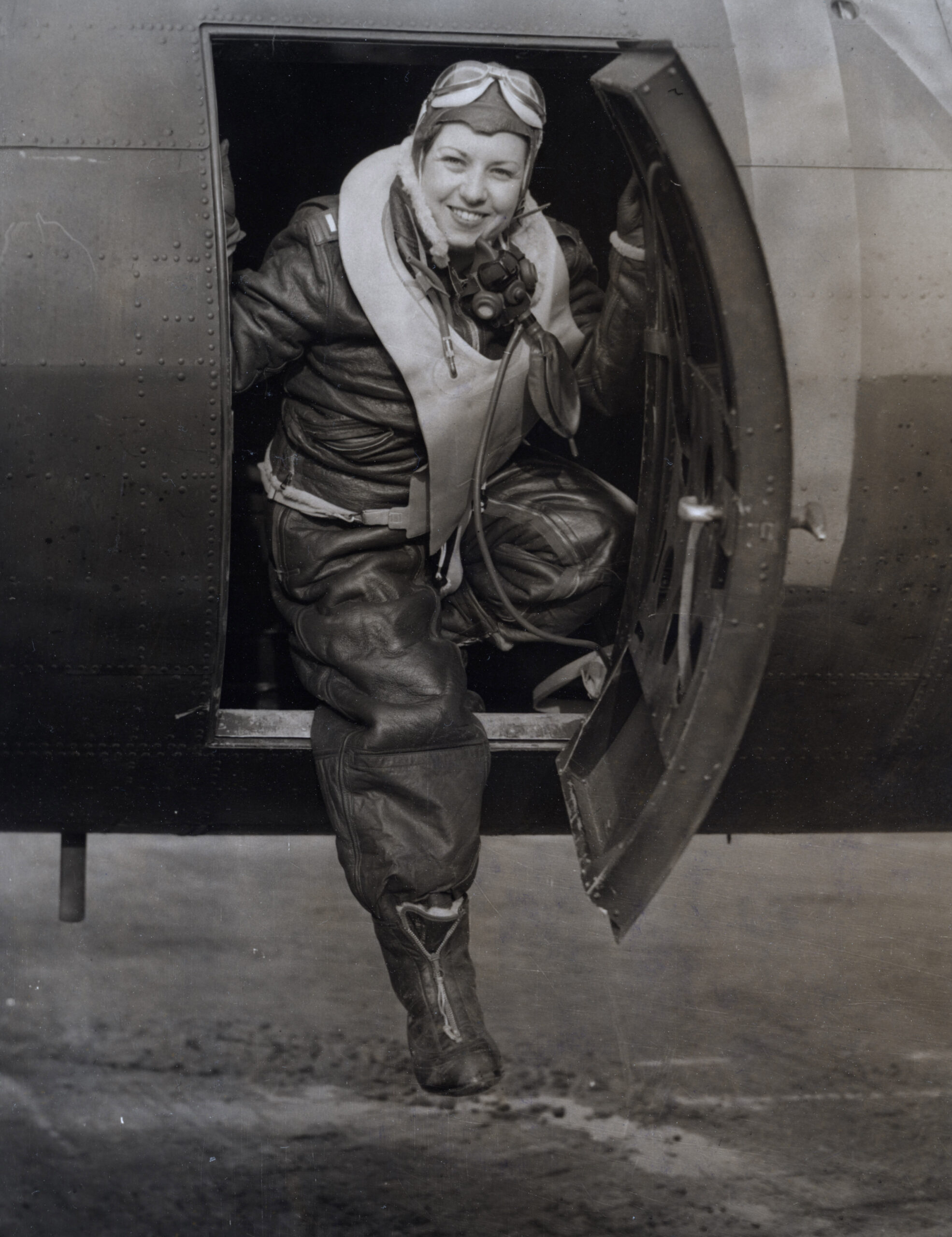
2LT Hilda R. “Bunny” Burgess poses in the waist of a 305BG B-17F at RAF Chelveston.
The former head nurse of Hartford Hospital in Connecticut, Burgess was photographed during high-altitude familiarization for air-evacuation training. Flight nurses like Burgess specialized in air-evac ops, being trained at Bowman Field, Kentucky alongside flight surgeons and medical technicians.
The waist hatch on this aircraft is the “built-up” type common to older B-17s.
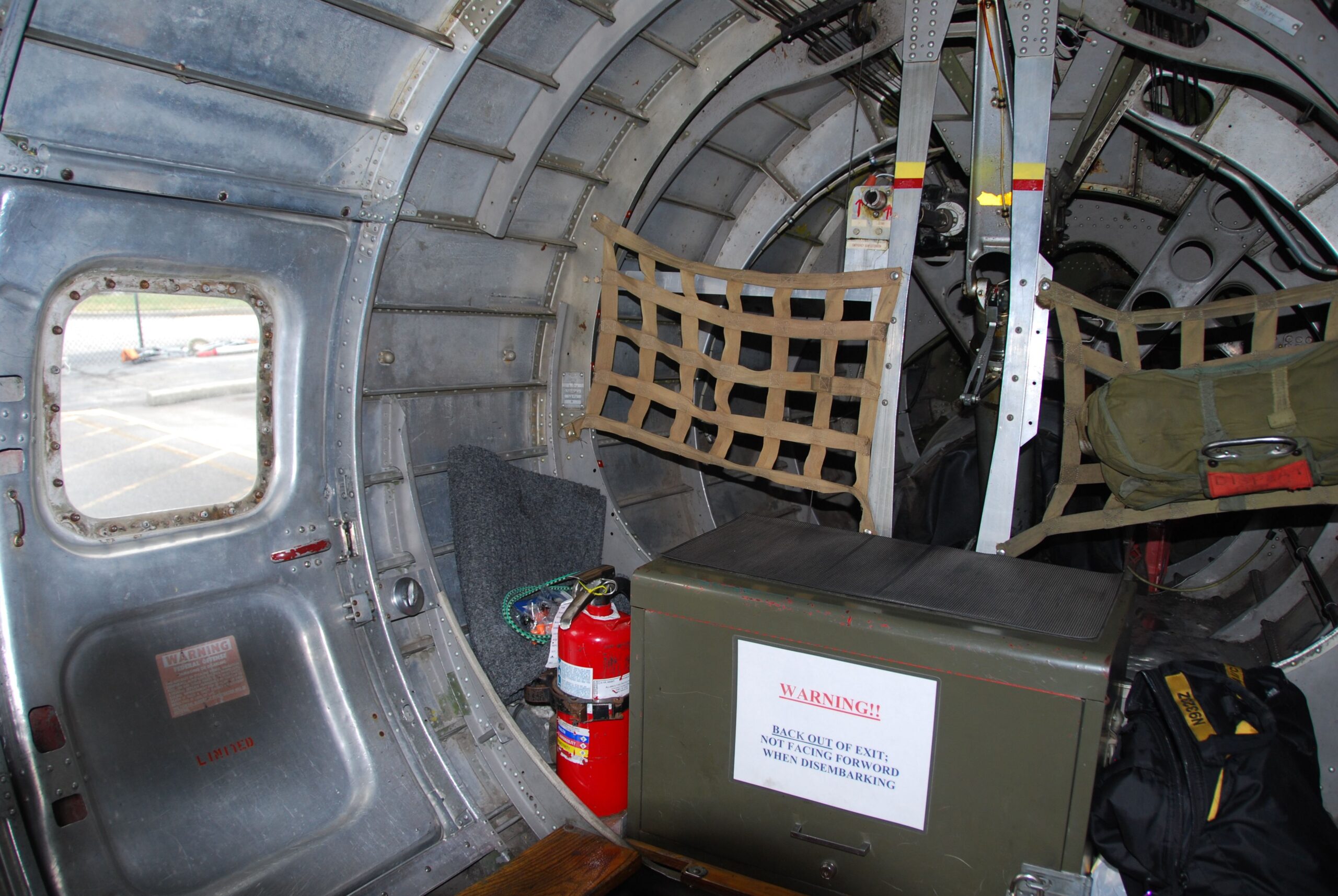
The waist compartment of Sentimental Journey (44-83514) of the CAF’s Arizona Wing. Note the later, stamped-type waist hatch.
At the time of this article, Sentimental Journey is but one of three airworthy B-17s in the world.
Just before leaving for California, I got the news from Ray that, while unpacking boxes from the move, a piece had fallen and broken a toe. The piece in question was the co-pilot’s sliding glass window and, sadly, the fall had cracked the glass.
Well, one of our stops on the trip was to visit Robert Kropp of GossHawk Unlimited in Casa Grande, Arizona. Robert has been a great friend for years now and it was a treat to finally meet in person. Robert is one of the honchos behind the group’s PB4Y-2 Privateer – the only airworthy example in existence!
The Privateer was the Navy variant of the Consolidated B-24, with the -2 type being modified to the extent of almost being a new design. The Navy’s need for long-range patrol aircraft had long been a point of contention with the Army, who saw it as a conflict of needs and responsibilities. But as the war in Europe waned (and with it, the need for further Army B-24s), the Navy was able to have Consolidated produce a design thoroughly adapted for the task. The Privateer was nearly seven feet longer than the B-24, featuring turrets in the nose, tail, and waist positions. The upper turret was now joined with a second mounted amidships. And because the aircraft operated at lower altitudes, the engines were no longer turbocharged and the ball turret removed. A plethora of ECM and radar equipment was added and, most distinctively, the twin tail was replaced with a massive, single vertical stabilizer.
Little remembered today (which is sad), the Privateer saw massive use in the Korean War and the latter years of the Second World War. GossHawk’s example, BuNo 66302, was delivered to the US Navy on 10 September 1945, being immediately placed into storage until 1951, where she was one of eleven transferred to the US Coast Guard. This saw the aircraft converted into a P4Y-2G, removing the gunnery positions and installing large observation windows in the nose and waist. 66302 stayed with the Coast Guard for seven years before being sold to the civilian market. Converted into a “Super Privateer” by replacing her R-1830 engines with R-2600s, 66302 operated as firefighting tanker up into 2006. She currently flies in her original Coast Guard configuration.
So, being a fellow heavy, you can understand our mutual interest!
Kropp invited us to dig through his parts collection and, lo and behold, he had B-17 cockpit windows! So, after several hours of fisticuffs, resulting in bloody noses and broken teeth, I finally convinced Robert to part with a pair for Lucky Thirteen. Not only that, but he also had a rare B-17F-style bombardier’s window pane – absolutely incredible.
It was only after getting back that I realized that the replacement windows I brought back were the forward-facing windows, not sides ones, like the one Ray broke. We needed them anyway, so I cannot say I made a mistake!
And with friends like Robert, there will definitely be a next time.
66302 was not in town when we visited, so here’s hoping that I can finally see her in person when we next meet!
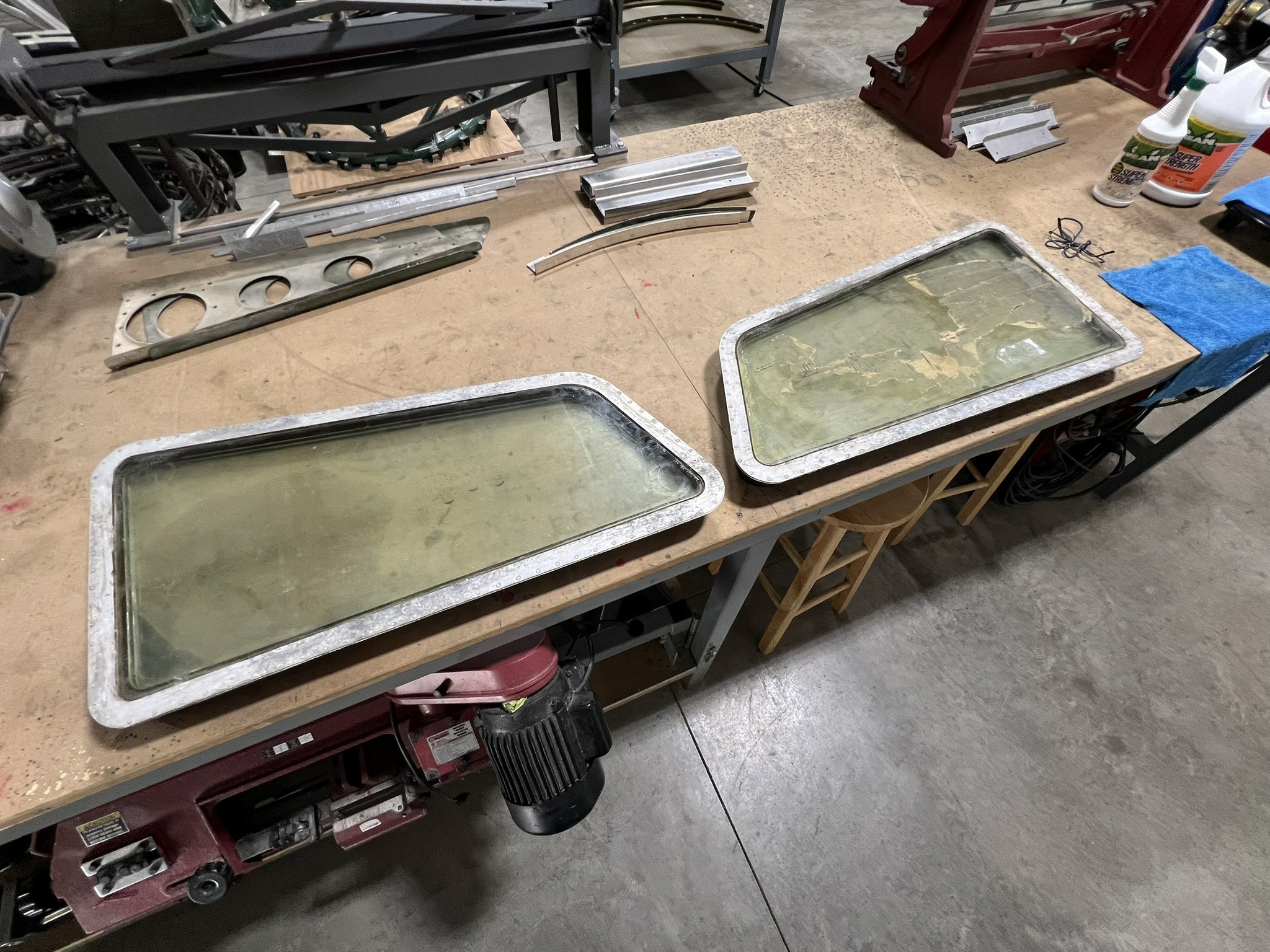
While the B-17’s factory windscreen was made of tempered glass, the increasing ferocity of the air war saw to the introduction of bulletproof glass in the cockpit. These kits were identifiable by their large, silver rims and were quite heavy.
The windows shown here are NOS, with some of the protective wrapping still on the right window.
Photo taken 18 August 2025.
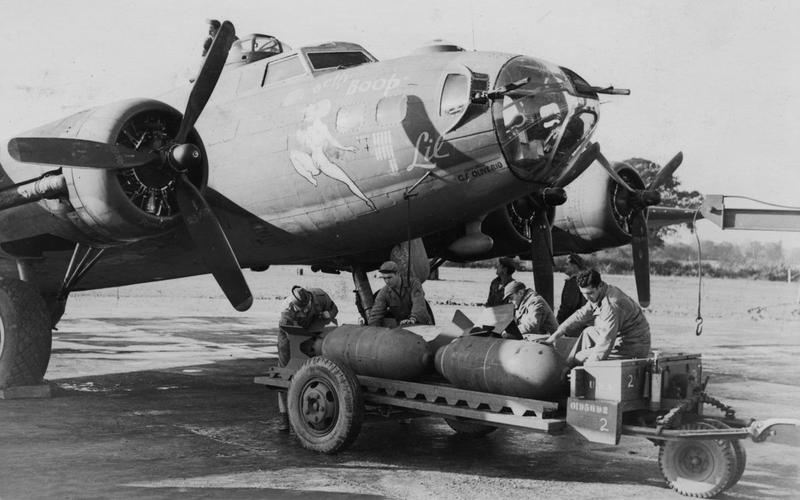
Li’l Betty Boop (42-30434) of the 390BG.
Note the silver rims on the cockpit windows. This aircraft has bulletproof glass installed in the cockpit.
Li’l Betty Boop was lost over Regensburg on 25 February 1944 during Operation ARGUMENT.
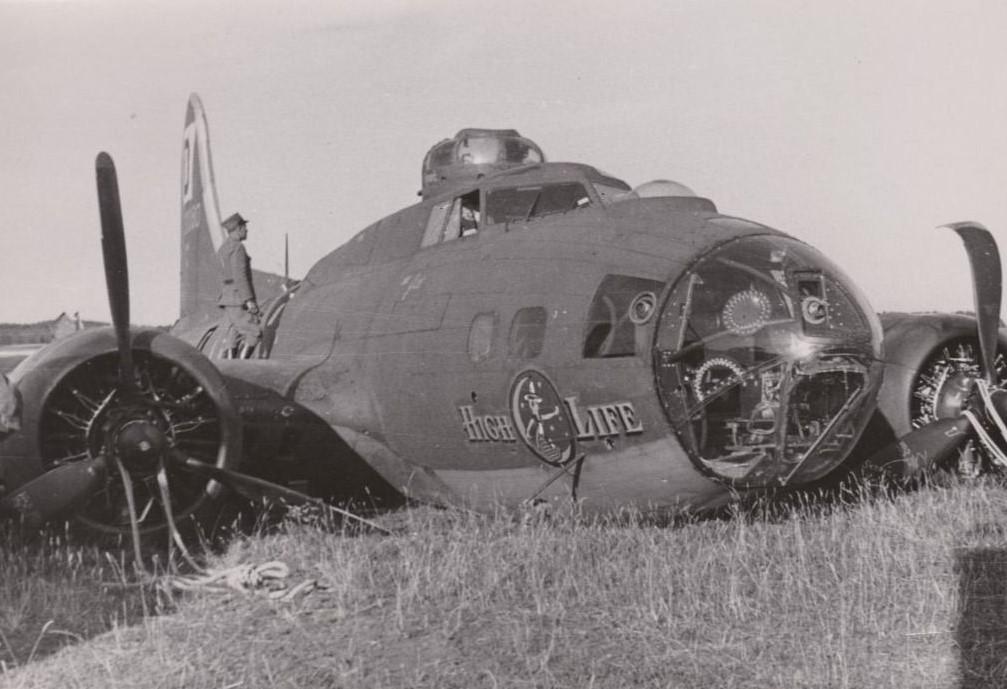
High Life (42-30080) of the 100BG is inspected by local authorities after crashlanding in neutral Switzerland during the 17 August 1943 strikes on Schweinfurt and Regensburg. High Life was the second US aircraft (and first B-17) to be interned in Switzerland during the war.
Note the lack of silver rims on the cockpit glass – these are the factory installed windows.
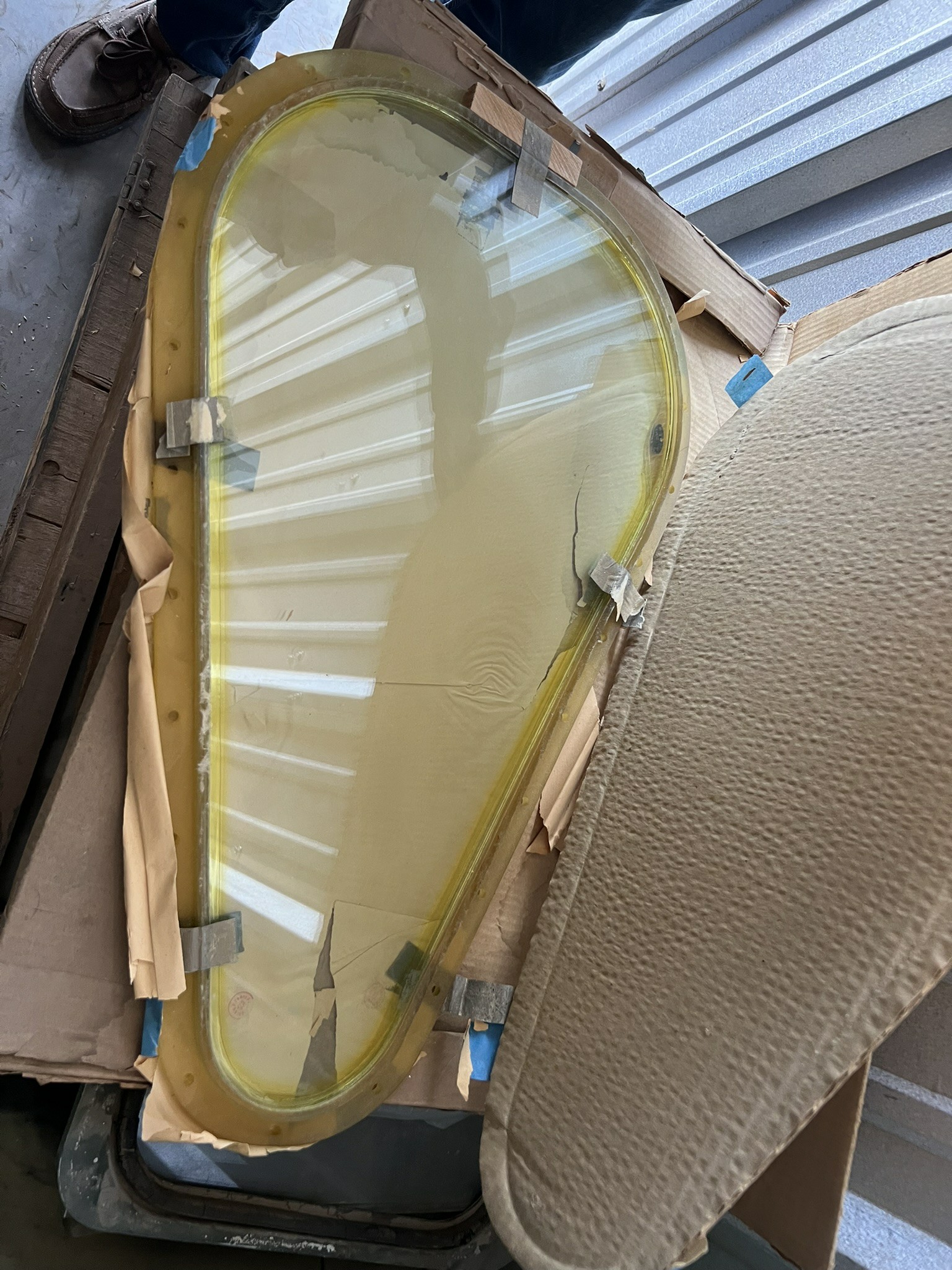
The NOS B-17F-style bombardier window, still in its original box.
To ensure the view was not distorted, the window pane beneath the bombsight was made of tempered glass rather than plexiglass.
Photo taken 12 August 2025.
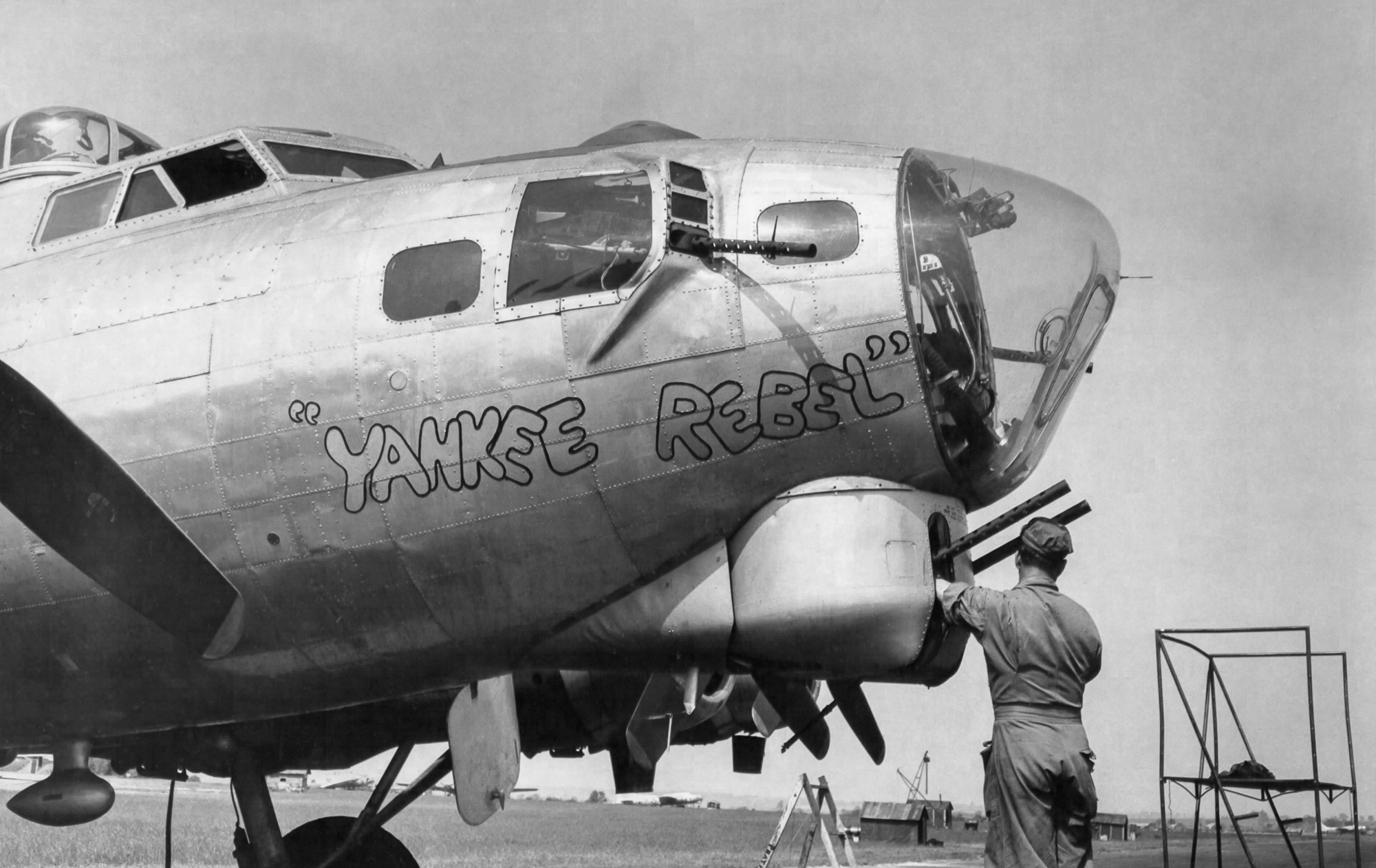
An aircraft with a truly unique name, Yankee Rebel (42-32049), a B-17G of the 381BG. Note the bombardier’s window pane, which is more triangular than the older variant.
The older style nose protruded farther, which caused the bombardier’s window pane to crack when firing the chin turret. This was partially resolved by fitting early chin turrets with flash suppressors. This revised nose, with its shallower profile and reshaped window pane, entered service with block G-15-BO.
Yankee Rebel was lost on 3 August 1944 over the North Sea, leaving no survivors.
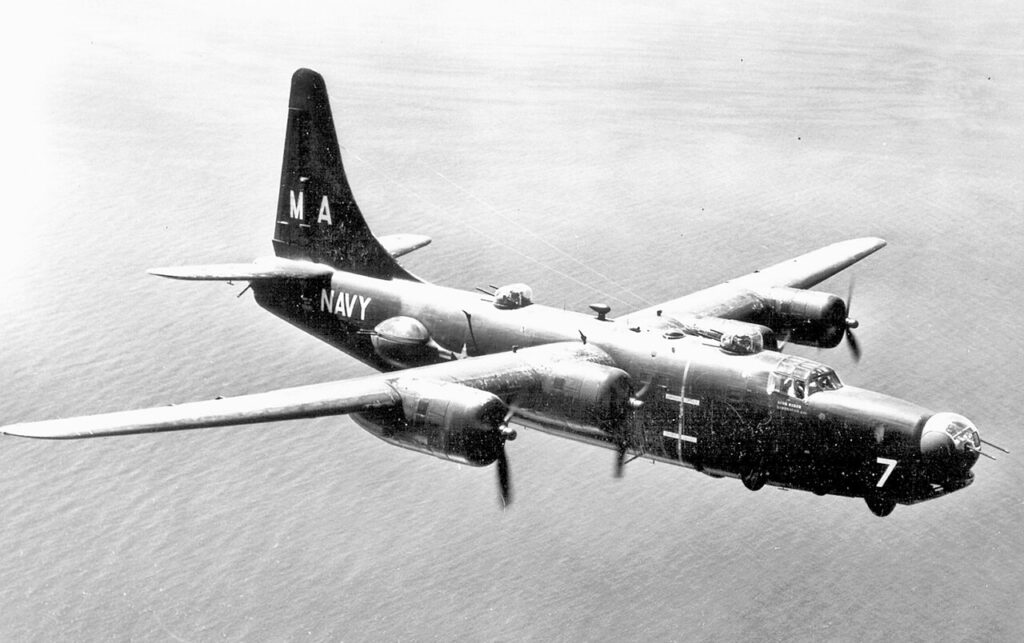
A photo of Navy Privateer BuNo 66304 of VP-23 taken sometime in the postwar years.
The layout on this aircraft is common to the PB4Y-2.
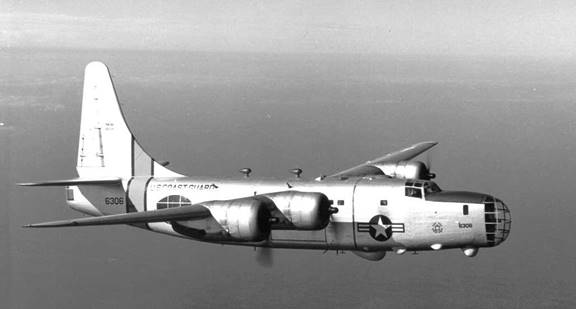
One of 66302’s sister ships, Coast Guard P4Y-2G BuNo 56306.
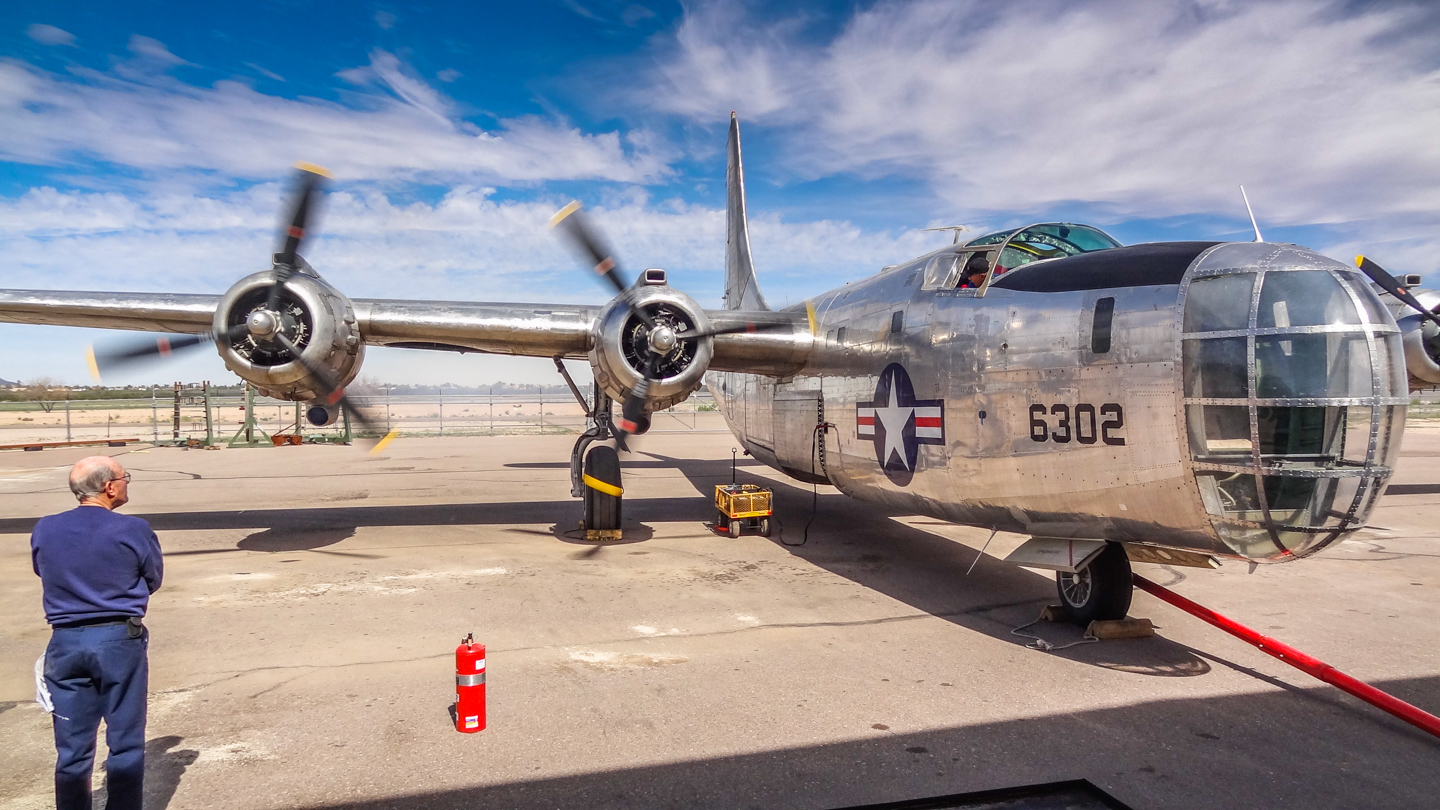
BuNo 66302 shortly after her restoration by GossHawk.
I have heard that she is a sight to see in person. They have to come out to the Carolinas sometime!
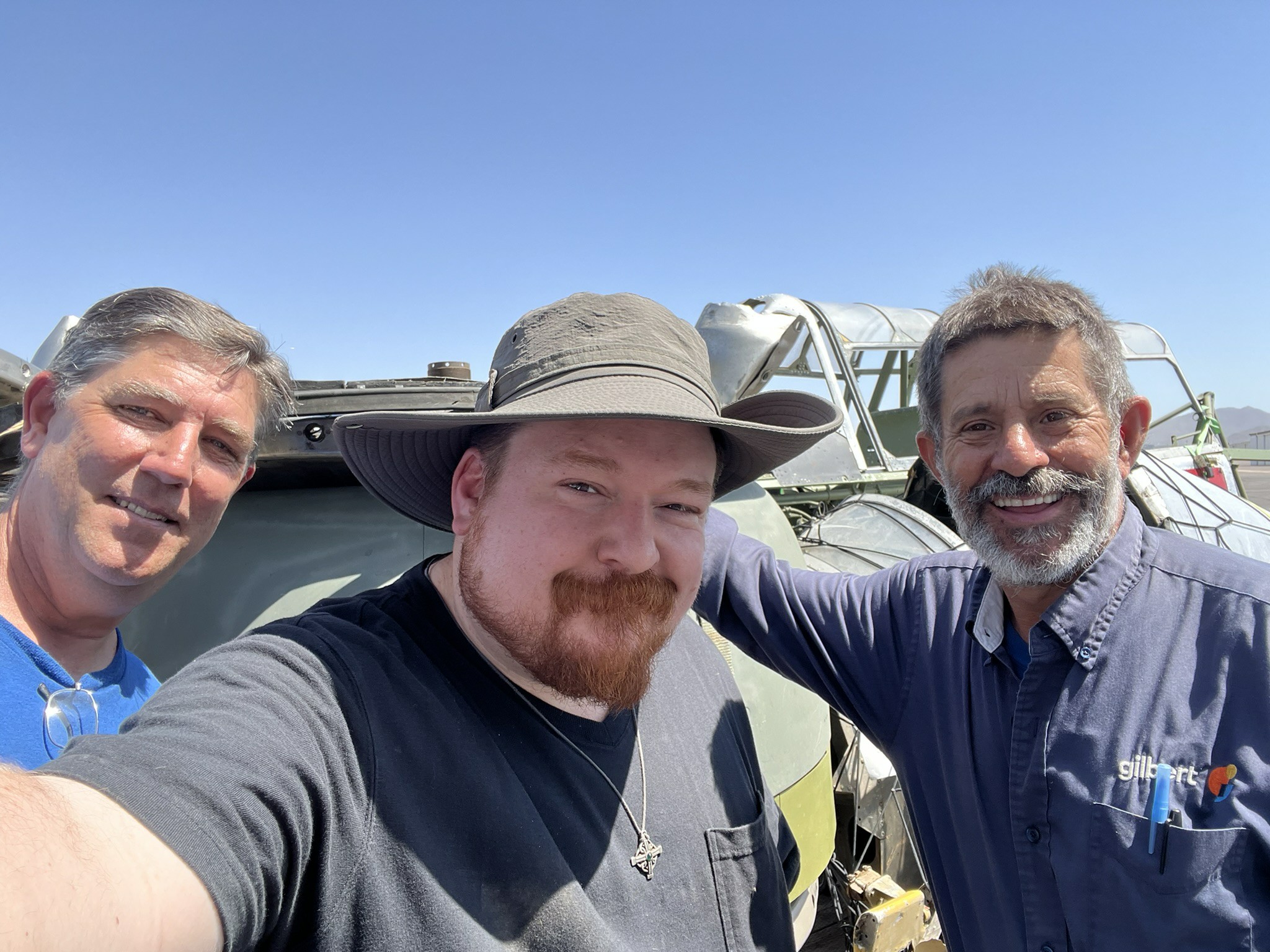
Eric Miller, myself, and Robert Kropp pose for a selfie.
Photo taken 12 August 2025.
The Hangar Thirteen Foundation is a 501c3 nonprofit charity dedicated to bringing back a B-17F representative of the bloody counter-air campaign of June 1943 through March 1944. Donations to this project are tax deductible. If you can spare a little to help this project, you can guarantee that you will see the results on Facebook and here on our website.
You can contribute through the Donate page or, to avoid a PayPal fee, you can send something via the mail to:
Gerad Allen Blume
Hangar Thirteen Foundation
442 Old Chalk Bed Road
Batesburg, SC 29006
Volunteers are also always welcome. In fact, you need not be an Asheville resident – you can work from home! Persons skilled with metal fabrication, machining, CAD modeling, metal casting, 3D scanning, and laser/waterjet cutting, are particularly helpful. Just reach out to us to get started.
Keep the show on the road!